ENT
Overview
The Department of ENT at Amrita Hospital, Kochi was started in 2000 to provide affordable, compassionate and holistic care for patients with issues related to the ear, nose and throat as well as head and neck. It has grown to the extent of being one of the leading centers in India providing services at an affordable cost, along with basic and specialized training in the discipline. We now have state-of-the-art facilities and equipment for investigation and treatment of a wide variety of disorders in ENT.
Doctors
Contact Us
Phone: 0484 – 2858670, 0484 - 6688670
Email: [email protected]
Specialities
- Otology
- Paediatric Otolaryngology
- Rhinology And Endoscopic Skull Base Surgery
- Rhinoplasty
- Sialology
- Neuro Otology (Evaluation And Management Of Vertigo And Balance Disorders)
- Airway And Voice Clinic (Evaluation And Management Of Airway And Voice Disorders)
- Deglutology (Evaluation And Management Of Swallowing Disorders)
- Snoring And Obstructive Sleep Apnoea
- Audiology And Speech Pathology
Diseases Treated
- Pre auricular sinus
- Ear Infections
- Autoimmune inner ear disease
- Sudden sensorineural hearing loss
- Hearing Loss
- Bell’s Palsy
- Chronic Otitis Media- cholesteatomas and tubotympanic type
- Cochlear/acoustic nerve disorders
- Conductive hearing loss
- Congenital malformations
- Eustachian tube dysfunction
- Endolymphatic hydrops
- Tinnitus (ringing in the ear)
- Meniere’s disease
- Vertigo (dizziness)
- Hyperacusis (sensitivity to everyday sounds)
- Labyrinthitis
- Otitis externa (swimmer’s ear)
- Otitis media (chronic ear infection/pain)
- Otosclerosis
- TMJ (temporomandibular joint dysfunction)
- Tonsillitis
- Adenoitis
- Pharyngitis
- Sleep Apnea
- Goiter (enlarged thyroid)
- Graves’ Disease
- Hashimoto’s Thyroiditis
- Head and neck cancer
- Diseases of the thyroid and parathyroid glands
- Sinus Infections and Inflammatory lesions
- Epistaxis including Endoscopic Sphenoplatine Artery Ligation and Embolisation when required
- CSF Leak
- Fungal sinusitis
- Nose Hump and external deformities
- Deviated Nasal septum
- Snoring and Sleep Apnoea
- Laryngeal (voice box) tumors
- Vocal cord paralysis
- Airway narrowing
- Neck abscess and Infections
- Neck masses
- Salivary gland disease-Stones and Infections
- Salivary gland Tumours
- Disorders of swallowing
Features
- Zeiss microscope
- Leika microscope
- Paediatric and adult nasal endoscopes
- Facial nerve monitor
- Microdebrider
- Pneumatic drill system
- Sialendoscope
- Coblator
- Laser
Why choose us?
- Established in 2000 at Amrita Hospital, Kochi.
- Pioneering institution specializing in ENT and head & neck care.
- Provides comprehensive and affordable high-quality care for ear, nose, throat, and head & neck disorders.
- Advanced ENT care with Cutting-edge technology for precise diagnosis and treatment of ENT and head & neck disorders.
- Expert care for all ENT disorders, delivered with exceptional professional excellence.
- Specialist departments, including Otology, Pediatric Otolaryngology, Rhinology, Sialology, Laryngology, and Head and Neck Diseases for the comprehensive care of all ENT-related diseases.
What we offer
- Specialized services to treat all Ear, Nose, and Throat conditions.
- Dedicated Otology division to manage ear ailments in adults and children.
- Consistently deliver surgical outcomes on par with the best in the field for routine surgeries such as Tympanoplasty, Mastoidectomy, Stapedectomy, and Ossiculoplasty.
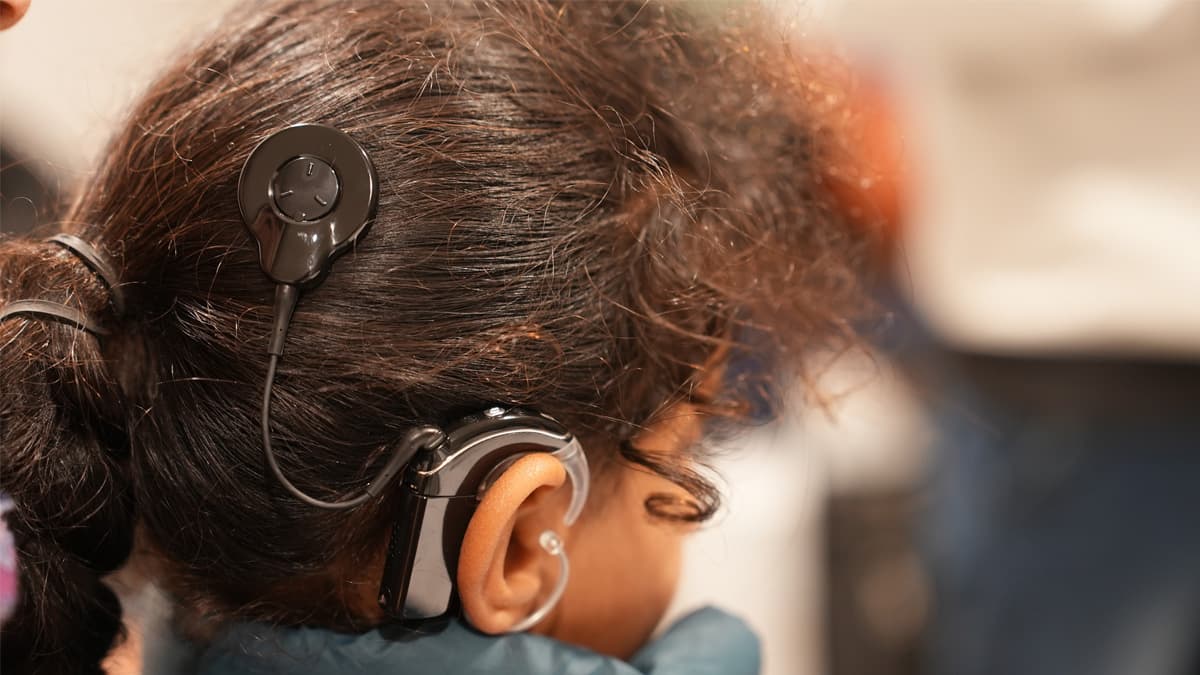
- Expertise in performing intricate ear surgeries, including Facial Nerve Decompression, Glomus Tumor excision, CSF otorrhea closure, BAHA, and Cochlear Implantation.
- Plans to introduce middle ear implants in the near future.
- Pediatric Otolaryngology Services
- Cochlear Implantation and Rehabilitation programs since 2007
- Adherence to international protocols and guidelines
- Well-equipped for various pediatric ENT surgeries, including adenoidectomy and tonsillectomy.
- Focuses on the health and well-being of children
- Rhinology Services
- International standard care for nose and paranasal sinus diseases
- Performs advanced procedures such as FESS, CSF Rhinorrhea, Endoscopic skull base surgery, Transpterygoid Approaches, and JNA Excision and Rhinoplasty.
- Salivary Gland Disease Treatments
- Expert sialogists for medical and surgical treatment of salivary gland disorders
- Performs surgical procedures, including Sialodochotomy, Submandibular and parotid gland removal, and Minimally invasive aesthetic
- Dedicated Voice Clinics
- Experienced Laryngologists to address voice disorders
- Specialized care for Professional voice users
- Treatment for swallowing disorders
- Advanced diagnostics such as FEES and Videofluroscopy for swallowing dysfunction evaluation
- Head And Neck Services
- Surgical management of benign head and neck conditions. Such as Thyroidectomy, Parotidectomy, and more
- Dedicated doctors and multidisciplinary teams for the evaluation of snoring and sleep-disordered breathing.
- Neuro-Otology & Balance Disorders
- Trained team of neuro-otology for vertigo and balance disorders
- Comprehensive vertigo evaluation using Videonystagmography
- Audiology and speech pathology services to ensure optimal care through Comprehensive Testing, Hearing Aid trials, Voice Evaluation, and Specialized investigations.
Service
- Preauricular sinus excision
- Myringotomy and Grommet insertion
- Tympanoplasty
- Mastoidectomy
- Stapedectomy
- Facial nerve decompression
- Glomus tumour excision
- CSF otorrhoea closure
- BAHA
- Cochlear implantation
- We plan to start middle ear implants in the immediate future.
- Cochlear implantation and rehabilitation programme
- Endoscopic video assisted adenoidectomy
- Tonsillectomy
- Surgery for Laryngomalacia
- Surgery for Choanal atresia,
- Surgery for Laryngotracheal stenosis
- Foreign body removal from bronchus and esophagus.
We are ably supported by Paediatrics, Neonatology, Critical care and Anesthesiology departments.
- Septoplasty
- FESS
- CSF Rhinorrhoea repair
- Endoscopic skull base surgery
- Endoscopic Sphenopalatine Artery Ligation
- Rhinoplasty.
- Frontal and sphenoid sinus surgeries are performed routinely with superior results.
- Endoscopic anterior skull base (pituitary tu-mours) and transpterygoid approaches (angiofibromas) are done here.
We treat diseases of the salivary gland both medically and surgically.
- Surgeries include sialodochotomy (removal of calculus from duct) and subman-dibular and parotid gland removal in the required cases.
- Aesthetic parotidectomy (minimal incision) is being practiced.
Sialendoscopy (endoscopic salivary gland surgery) takes care of early diseases without surgery.
- Voice pathology: We provide solutions to voice problems with a dedicated voice clinic every Friday, ably supported by a speech pathologist.
- Stroboscopy and voice evaluation and documentation are a part of the clinic. We tend to be professional voice users also. Surgeries like thyroplasty and micro-laryngeal surgeries are performed.
- We evaluate swallowing with procedures like FEES, Videofluoroscopy and a dedicated therapy session ensures patient benefit
- Kashima’s laser cordotomy
- Arytenoidectomy
- Lateralization of vocal fold
- Laryngotracheoplasty
- Tracheal reconstruction and anastomoses.
Surgical management for benign conditions, such as:
- Thyoridectomy
- Parotidectomy
- Submandibular sialadenectomy
- Parapharyngeal tumour excision
- Deep neck space infections
Routine investigations such as pure tone audiometry (PTA), speech discrimination tests, tympanometry, SISI and TDT. Specialized investigations include:
- ASSR
- OAE
- BERA
- Behavioural audiometry
- AVT
- Voice evaluation software:
- Dr. Speech
- EEG
Voice therapy for all types of dysphonia is given.
Hearing aids trial and dispensing is available.
Specialized investigation for cases of vertigo – ENG,VEMP – is also available.
Pre- and post-cochlear implant rehabilitation under expert audiologists.
Video Gallery
Our Philosophy
At the Department of ENT, we adhere to a philosophy rooted in compassion, innovation, and excellence. Our dedicated team of professionals is committed to delivering high-quality care, ensuring that each patient receives personalized attention and treatment. We believe in the power of advanced technology, staying at the forefront of medical advancements to provide the best solutions for our patients. Our commitment to continuous improvement, coupled with a holistic approach to healthcare, sets us apart as a trusted institution for all your ear, nose, and throat needs. Our specialty clinics, such as the Voice Clinic, Sialology Clinic, Otology Clinic, and Snoring Clinic, reflect our dedication to comprehensive and patient-centric care. Choose us for a healthcare experience that combines expertise, empathy, and the latest medical advancements to help you regain your health and well-being.
Academy
- Trainee Programme
- Ms (Ent)
Facilities
- Nasal endoscopy
- Flexible fibre optic nasopharyngolaryngoscopy.
- Microscopy of the ear/Foreign body removal.
- Video laryngoscopy
- Epley’s Manoeuvre.
- Ear piercing and ear lobe repair.
- Positional testing.
- Cauterization for nasal bleed.
- Cold caloric testing.
FAQS
An otolaryngologist is a medical specialist who focuses on diagnosing and treating ear, nose, and throat (ENT) diseases, as well as head and neck-related conditions. They are often referred to as ENT doctors. You can find more information about them at
Children, especially those under the age of three, are prone to ear infections due to their developing Eustachian tubes. The tubes can become blocked by fluid following viral or bacterial infections. Most ear infections resolve within a week and can be managed with over-the-counter medications, eardrops, and warm compresses. Antibiotics may be prescribed for bacterial infections, and ear tubes may be considered for chronic cases.
Frequent sinus infections can result from inflamed and swollen sinus linings. This inflammation can cause nasal obstruction, sinus pain, congestion, and discharge. If medical treatments prove ineffective, surgery may be an option.
Nasal obstruction can be caused by issues like a deviated septum, nasal turbinate enlargement, adenoid enlargement, or nasal polyps. Surgical solutions may be available for these conditions when recommended.
Hoarseness often results from larynx irritation due to upper respiratory infections, GERD, or postnasal drip. If hoarseness persists for more than four to six weeks, it's advisable to consult a doctor to rule out more serious causes like nodules, tumors, or vocal cord paralysis.
Snoring is a common issue, and lifestyle modifications like weight loss, changing sleep positions, and avoiding alcohol before bedtime can help. Surgery may also be an option. Snoring can be associated with obstructive sleep apnea, a serious medical condition.
Obstructive sleep apnea (OSA) is a condition where breathing periodically stops during sleep, leading to daytime fatigue, irritability, and increased risk of heart attack, stroke, high blood pressure, and diabetes. Treatments for OSA may include CPAP, oral appliances, and other advanced procedures.
Signs of hearing loss include difficulty understanding speech, asking for repeated speech, struggling in noisy environments, and hearing a ringing or buzzing in the ears. Social withdrawal and depression can also be indicators. It's crucial to seek professional evaluation if you suspect hearing loss.
Modern hearing aids are discreet and often nearly invisible. Wearing hearing aids is less noticeable than the consequences of untreated hearing loss, such as social withdrawal and communication difficulties.
Snoring can occur occasionally due to congestion but may be severe if associated with factors like poor muscle tone of the throat or excessive tissue in the tonsils, adenoids, soft palate, or uvula. Lifestyle changes and laser-assisted procedures can help manage snoring.
Specialty Clinics
- Voice clinic
- Sialology clinic
- Otology clinic
- Snoring clinic
Diagnostic Tests and Procedures
A comprehensive Ear, Nose, and Throat (ENT) examination delves into various aspects of our sensory organs. It encompasses the face, ears, nose, throat, and neck, ensuring a thorough evaluation of your sensory health.
Incorporating hearing screening and specialized techniques, this section assesses auditory health. Procedures like pneumatic otoscopy or tympanometry provide valuable insights into the condition of the eardrum, particularly for the presence of fluid.
This segment of the examination concentrates on the nasal passages. It involves the use of a headlight or mirror, complemented by a handheld speculum, to scrutinize the nasal septum and turbinates closely. Both pre- and post-application of a decongestant nose spray are part of the standard procedure.
One of the distinctive aspects of the ENT examination is the evaluation of the voice box and the posterior nasal region. This in-depth assessment involves the use of handheld mirrors inserted into the mouth to provide a comprehensive view of these critical areas.
The examination extends to the neck, where a meticulous evaluation takes place. This includes an assessment of lymph nodes, salivary glands, and the thyroid gland. Furthermore, an overall health check, involving the cardiopulmonary system, concludes the routine examination.
It's important to note that an ENT examination is generally a comfortable and non-painful experience. However, some patients may experience a gag reflex during the examination of the mouth.
For individuals with hearing-related complaints, audiometric testing is a standard procedure. It involves a series of evaluations, including the Otoacoustic Emissions Test (OAE) to assess hearing health. This test is particularly effective in screening newborns and individuals who can follow instructions.
Patients undergoing audiometric testing in an acoustically isolated booth have their ability to hear the softest sounds at various frequencies recorded, resulting in an audiogram. Additionally, tympanometry is used to measure middle ear barometric pressure and assess fluid behind the eardrum, especially in young children.
The most commonly performed diagnostic procedure for patients with nasal, sinus, or allergy issues is nasal endoscopy. A nurse administers a decongestant combined with a local anesthetic before a physician or nurse practitioner employs a small telescope to examine the nasal passages closely. This examination can reveal various abnormalities.
In cases of throat-related issues like hoarseness or swallowing difficulties, a flexible scope is utilized to examine the throat and voice box through the nasal passage. This is especially valuable for patients who may find traditional mirror examinations uncomfortable. In some instances, an extended endoscope is employed to perform a trans-nasal endoscopy, offering a thorough examination down to the esophagus and even the stomach if necessary.
In most cases, the endoscopic image can be displayed on a television monitor, allowing patients to gain a better understanding of their condition.
Allergy testing is typically recommended for patients unsatisfied with traditional allergy management. This is particularly relevant for individuals with asthma or nasal polyps. The assessment involves superficial skin pricks and subcutaneous injections, measuring sensitivity to various allergens and determining a safe starting dose for immunotherapy.
Treatments
- Acoustic immittance testing
- Acoustic voice assessment
- Aerodynamic voice assessment
- Airway reconstruction
- Auditory brainstem implant
- Auditory evoked potential test
- Aural rehabilitation
- Balloon sinuplasty
- Blepharoplasty
- Botox injections
- Bronchoscopy
- Brow lift
- Canalith repositioning procedure
- Chemical peel
- Cleft lip repair
- Cleft palate repair
- CO-2 laser treatment
- Cochlear implants
- Computerized dynamic posturography
- Cosmetic surgery
- Custom ear protector fitting
- Dental implant surgery
- Ear reconstruction
- Electroacoustic assessments of hearing aids
- Electromyography (EMG)
- Electronystagmography
- Endoscopic sinus surgery
- Esophagoscopy
- Face-lift
- Facial fillers for wrinkles
- Facial fracture repair
- Facial nerve rehabilitation
- Facial reconstruction
- Facial rejuvenation
- Fat grafting
- Flexible endoscopic evaluation of swallowing with sensory testing (FEESST)
- Hearing aid fitting
- Hearing conservation services
- Hearing implant surgery
- Hearing monitoring services
- Hearing test
- Hearing test for children
- Infant hearing screening
- KTP laser treatment
- Laryngeal reinnervation
- Laryngoscopy
- Laryngotracheal reconstruction
- Larynx and trachea transplant
- Laser resurfacing
- Lip surgery
- Mastoidectomy
- Maxillomandibular advancement surgery
- Microlaryngoscopy
- Microvascular reconstruction
- Middle ear reconstruction
- Minimally invasive surgery
- Nasal septal reconstruction
- Nasal valve repair
- Neck lift
- Newborn hearing screening
- Nose reconstruction
- Otoacoustic emissions (OAE) test
- Otological microsurgery
- Otoplasty
- Parathyroidectomy
- Parotid gland surgery
- Parotidectomy
- Pharyngeal manometry
- Professional voice evaluation
- Rhinoplasty
- Robotic surgery
- Rotary-chair testing
- Scar revision
- Septoplasty
- Singing voice evaluation
- Sinus surgery
- Skin cancer reconstruction
- Speech-language pathology evaluation
- Stapedectomy
- Stroboscopy
- Swallowing exercises
- Swim mold fitting
- Thyroid surgery
- Thyroidectomy
- Thyroplasty
- Tinnitus assessment
- Tonsillectomy
- Tracheostomy
- Transnasal esophagoscopy
- Transnasal pituitary surgery
- Transoral laser microsurgery
- Transoral robotic surgery
- Turbinate surgery
- Ultrasound-guided fine-needle aspiration
- Ultrasound-guided surgery
- Upper airway stimulation therapy (Inspire device)
- Uvulopalatopharyngoplasty (UPPP)
- Vestibular rehabilitation
- Vestibular testing
- Videofluoroscopic swallowing study
- Videolaryngoscopy
- Vocal cord injection
- Voice therapy
Featured News
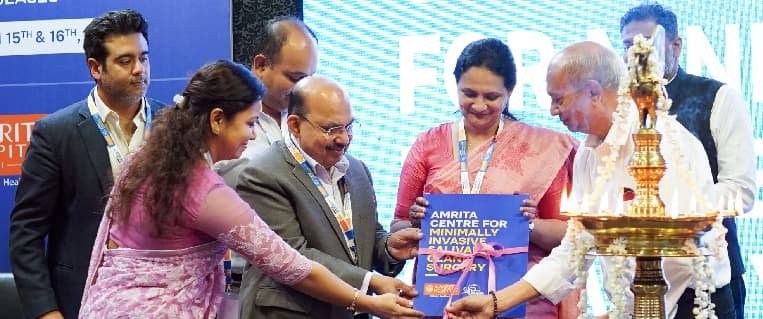
Amrita Hospital Introduces Minimally Invasive Salivary Gland Surgery Centre