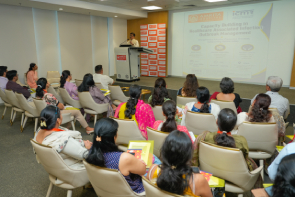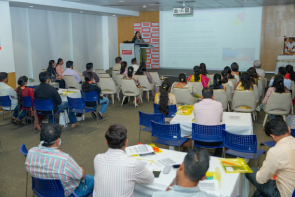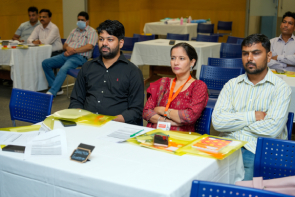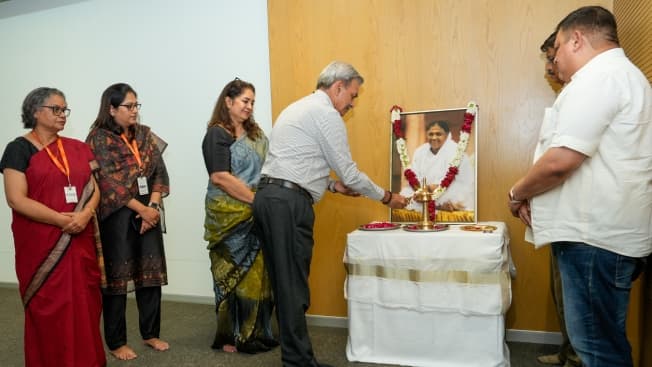
Reinforcing its commitment to strengthening infection prevention and patient safety, Amrita Hospital, Faridabad, hosted a Capacity Building Programme on Healthcare-Associated Infection (HAI) Outbreak Management on 28 July 2026. The workshop was conducted under the Indian Council of Medical Research (ICMR) project, "Capacity Building for Managing HAI Outbreaks in Tertiary and Secondary Care Hospitals across India (Including Dental Colleges), A Hub and Spoke Model," as part of the Capacity Building Program for Pandemic Preparedness (CBPPP) under PM-ABHIM.
The day-long programme brought together more than 35 healthcare professionals, including Medical Officers, Nursing Officers, Microbiologists, and Infection Control Nurses (ICNs) from Primary Health Centres (PHCs), Community Health Centres (CHCs), and District Hospitals across Faridabad, Jhajjar, Gurugram, Mahendragarh, Nuh, Panipat, Rewari, and Rohtak districts of Haryana.
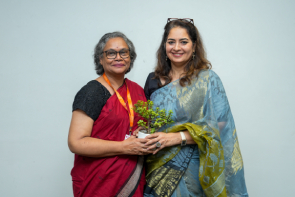
The workshop was inaugurated by Dr. Sanjeev Singh, Medical Director, Amrita Hospital, Faridabad; Dr. Kamini Walia, Scientist G, ICMR; Dr. Sushil Kumar Ahlawat, Deputy Civil Surgeon (Capacity Building & Training), Faridabad, and Nodal Officer for the programme; Dr. Sharmila Sengupta, Infection Control Officer, Amrita Hospital; and Dr. Sadia Khan, Professor and Head, Department of Microbiology, Amrita Hospital.
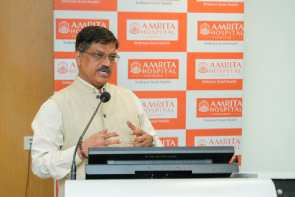
In his inaugural address, Dr. Sanjeev Singh highlighted the growing importance of strengthening institutional preparedness to effectively prevent and manage healthcare-associated infections. He emphasised that continuous capacity building and adherence to evidence-based infection prevention practices are essential to ensuring patient safety and improving healthcare quality.
Addressing the participants, Dr. Kamini Walia outlined the objectives of the ICMR project and spoke on the importance of continuous training, standardised infection prevention and control (IPC) protocols, multi-institutional collaboration, and the current landscape of antimicrobial resistance (AMR) in India.
The scientific programme featured expert-led sessions on the fundamentals of healthcare-associated outbreaks, outbreak investigation, and surveillance. Dr. Sharmila Sengupta introduced the principles of outbreak management and conducted a pre-training assessment, while Dr. Sadia Khan led an interactive case-based session on outbreak detection, equipping participants with practical epidemiological and diagnostic skills.
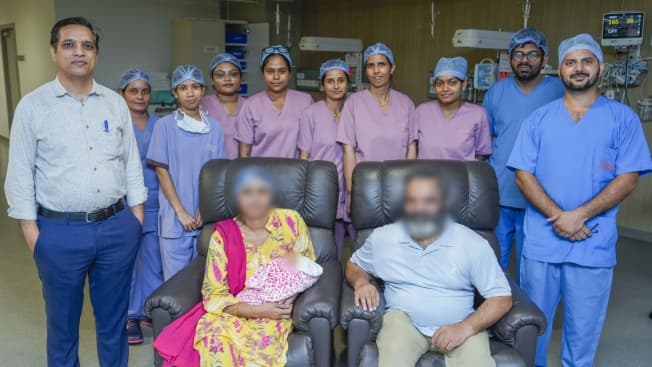
A key highlight of the workshop was the ICU observational round, during which participants visited critical care areas to observe infection prevention workflows, identify potential outbreak risks, and understand best practices in real-world clinical settings.
The afternoon sessions focused on antimicrobial stewardship, led by Dr. B. Abhinandh, Clinical Pharmacist, ICMR Project, who discussed the role of judicious antimicrobial use in combating antimicrobial resistance and preventing healthcare-associated outbreaks.
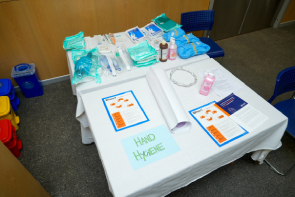
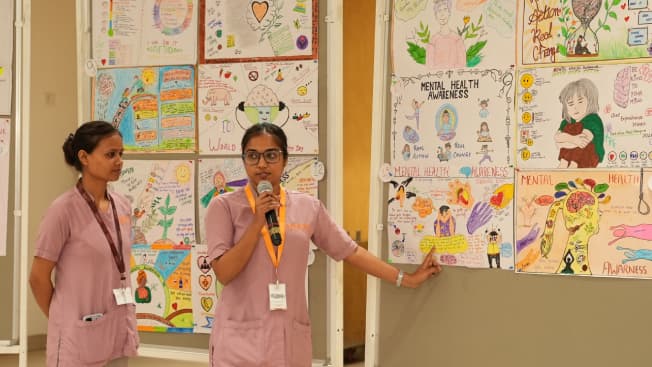
Participants also underwent hands-on training through dedicated skill stations covering essential infection prevention and control practices, including hand hygiene, personal protective equipment (PPE) protocols, biomedical waste management, cleaning and disinfection techniques, and other operational measures. The practical sessions were facilitated by Sr. Meenakshi, Infection Control Nurse, along with Ms. Gracy, Ms. Aayushi, and the Infection Prevention and Control team.
The programme concluded with a post-training assessment and participant feedback session, reflecting significant knowledge enhancement and practical skill development. The workshop reaffirmed Amrita Hospital Faridabad's commitment to advancing infection prevention practices, strengthening healthcare preparedness, and supporting national efforts to build resilient healthcare systems through continuous professional education.