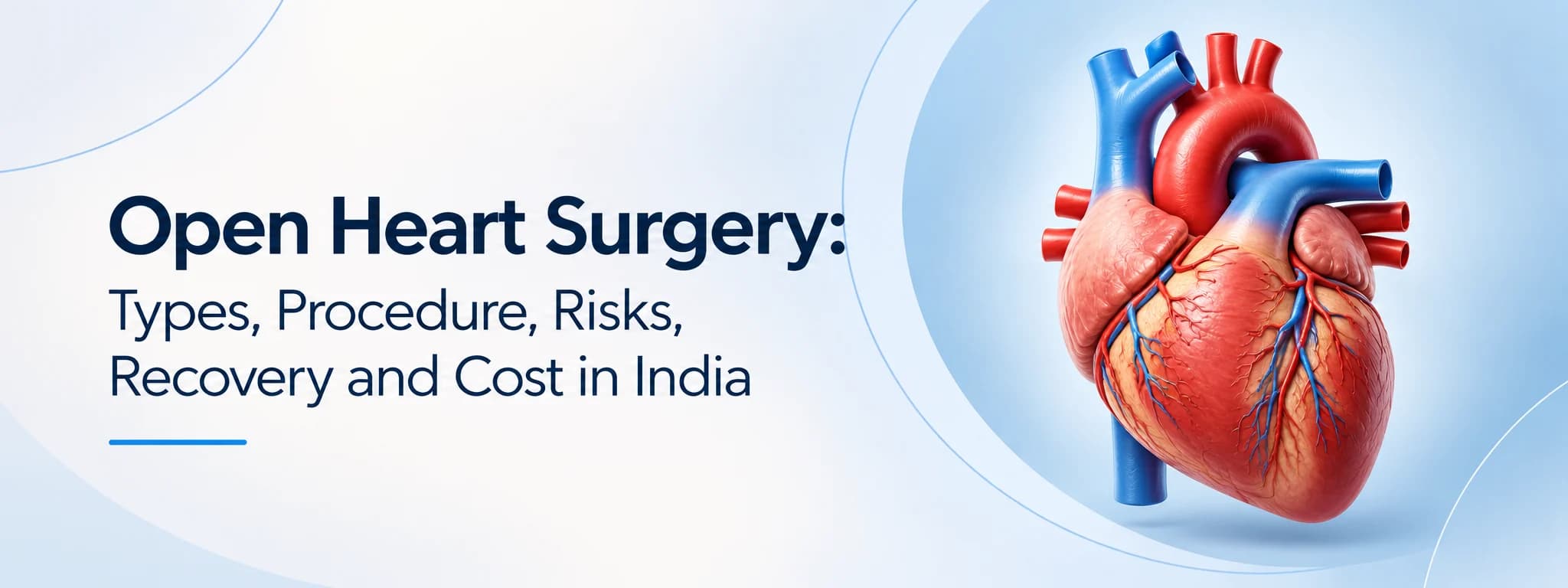
Hearing that you or someone in your family needs open heart surgery can raise many questions. How serious is the condition? What does the operation involve? How long will recovery take? What are the risks, and how much does it cost?
Open heart surgery is a major surgical procedure performed to treat conditions affecting the heart and the major blood vessels connected to it. The surgeon usually accesses the heart through an incision in the chest, commonly by opening the breastbone (sternum).
Open heart surgery may be recommended for severe coronary artery disease, heart valve disorders, congenital heart defects and diseases of the aorta when surgery offers the most appropriate treatment.
The term includes several procedures, such as coronary artery bypass grafting (CABG), heart valve repair or replacement, surgery for congenital heart defects and aortic surgery.
This guide explains the different types of open heart surgery, how the procedure is performed, its benefits and risks, recovery, costs in India and when to consult a cardiac specialist.
What Is Open Heart Surgery?
Open heart surgery refers to operations in which the chest is opened to provide direct access to the heart. The surgeon may operate on the coronary arteries, heart valves, aorta or other cardiac structures.
Despite the name, the heart itself does not always need to be opened. For example, during coronary artery bypass grafting, the surgeon works on the coronary arteries on the surface of the heart without necessarily entering its chambers.
Depending on the operation, the surgeon may use a heart-lung machine (cardiopulmonary bypass) to temporarily take over the functions of the heart and lungs. Some procedures can also be performed while the heart continues beating.
How Is the Chest Opened During Open Heart Surgery?
After administering general anaesthesia, the surgeon usually makes an incision along the centre of the chest. The breastbone is divided, either completely or partially, to provide access to the heart. This approach is called a median sternotomy.
In many operations, a heart-lung machine temporarily maintains blood circulation and oxygenation while the surgeon performs the procedure. Once the operation is complete, normal circulation is restored, and the breastbone is secured with surgical wires. The chest incision is then closed.
The surgical approach depends on the condition being treated, the complexity of the operation and the patient’s overall health.
Open Heart Surgery vs Minimally Invasive vs Catheter-Based Procedure
The most appropriate approach depends on the patient’s diagnosis, anatomy, surgical requirements and the expertise and facilities available at the treating hospital.
Types of Open Heart Surgery
Open heart surgery is not a single operation. It includes several procedures designed to correct different problems affecting the heart and major blood vessels.
Coronary Artery Bypass Grafting (CABG)
Coronary artery bypass grafting, commonly called bypass surgery, is one of the most frequently performed open heart operations in adults.
It treats coronary artery disease, a condition in which fatty deposits (plaques) narrow or block the arteries supplying blood to the heart muscle.
During CABG, the surgeon uses a healthy blood vessel from another part of the body to create a new route for blood to flow beyond the blocked portion of a coronary artery.
Commonly used grafts include:
• Internal mammary artery: A blood vessel from inside the chest wall, frequently used for bypassing the left anterior descending coronary artery.
• Saphenous vein: A vein taken from the leg.
• Radial artery: An artery taken from the forearm.
Depending on the number and location of the blockages, a patient may require a single, double, triple or even multiple bypass grafts.
The objective is to improve blood supply to the heart muscle, relieve symptoms and, in appropriately selected patients, improve long-term outcomes.
Heart Valve Repair and Replacement
The heart has four valves that regulate the direction of blood flow through its chambers and into the major arteries.
A valve may become narrowed (stenosis) or fail to close properly (regurgitation or insufficiency). These problems can place additional strain on the heart and cause symptoms such as breathlessness, fatigue, chest discomfort and swelling of the legs.
Depending on the severity and type of valve damage, the surgeon may recommend valve repair or replacement.
Valve repair
Whenever technically feasible, repairing the patient’s own valve may be preferable because it preserves native valve tissue. Repair techniques may include reshaping the valve, removing excess tissue, reinforcing the valve or implanting a supporting ring.
Valve replacement
When the valve is too damaged to repair, it may need to be replaced with one of two main types:
• Mechanical valve: Made from durable materials and designed to last for many years. Patients generally require lifelong anticoagulation with warfarin and regular INR monitoring.
• Biological or tissue valve: Made from animal or human tissue. These valves generally have lower long-term anticoagulation requirements when there is no other indication for anticoagulation, but they may deteriorate over time and eventually require replacement.
The choice depends on the patient’s age, lifestyle, medical history, expected durability, ability to take anticoagulants and the valve involved.
Surgery for Congenital Heart Defects
Congenital heart defects are structural abnormalities of the heart or major blood vessels that are present from birth.
Examples include holes between the heart chambers, abnormal connections between blood vessels and abnormalities of the heart valves or major arteries.
Surgery may be required to correct these defects and improve the circulation of blood through the heart.
Although many congenital heart operations are performed during infancy or childhood, adults with previously untreated or residual congenital heart conditions may also require surgery.
Some defects can be corrected in a single operation, while complex conditions may require staged surgical procedures.
Aortic Surgery
The aorta is the largest artery in the body and carries oxygen-rich blood from the heart to the rest of the body.
A section of the aorta may become abnormally enlarged, resulting in an aneurysm. A tear in its inner wall can lead to an aortic dissection, a potentially life-threatening emergency.
Examples include holes between the heart chambers, abnormal connections between blood vessels and abnormalities of the heart valves or major arteries.
Surgery may be required to correct these defects and improve the circulation of blood through the heart.
Although many congenital heart operations are performed during infancy or childhood, adults with previously untreated or residual congenital heart conditions may also require surgery.
Some defects can be corrected in a single operation, while complex conditions may require staged surgical procedures.
Aortic surgery involves repairing or replacing the affected portion of the vessel, usually with a synthetic fabric graft.
Depending on the location and extent of the disease, surgery may involve:
• Aortic root replacement.
• Ascending aortic replacement.
• Aortic arch replacement.
• Surgery for aortic dissection.
• Combined aortic valve and aortic root procedures, such as the Bentall operation.
The complexity of the procedure depends on the extent of aortic involvement and whether the aortic valve and other structures also need treatment.
Other major operations, including heart transplantation, also involve opening the chest and may be discussed under the broader category of open cardiac surgery.
When Is Open Heart Surgery Recommended?
Open heart surgery is generally recommended when a heart condition is sufficiently serious that medicines, lifestyle changes or catheter-based procedures are unlikely to provide the most appropriate treatment.
Some operations are planned in advance, while others, such as surgery for acute aortic dissection, may need to be performed urgently.
Conditions That May Require Open Heart Surgery
Coronary artery disease
CABG may be recommended for patients with significant coronary artery blockages, particularly when several arteries are affected, the left main coronary artery is involved or the disease is too complex for angioplasty and stenting.
Patients with diabetes, impaired heart function or persistent symptoms despite medical treatment may require careful assessment to determine whether bypass surgery offers greater benefit.
Severe heart valve disease
Severe narrowing or leakage of a heart valve can progressively damage the heart muscle.
Surgery may be advised when the patient develops symptoms such as breathlessness, chest discomfort, dizziness or swelling, or when investigations show that the heart is beginning to deteriorate, even if symptoms are not yet prominent.
Congenital heart defects
Some structural abnormalities present from birth require surgical correction, particularly when they interfere with normal blood circulation or place excessive strain on the heart.
Aortic aneurysm and dissection
Aortic surgery may be necessary when an aneurysm reaches a size or growth rate associated with significant risk, or when a dissection requires urgent intervention.
Factors That Influence the Decision
There is no single test or symptom that determines whether open heart surgery is necessary. The cardiac team considers several factors:
• Symptoms: Their severity, frequency and impact on daily activities.
• Diagnostic investigations: ECG, echocardiography, stress testing, coronary angiography and, when indicated, CT or MRI scans.
• Heart function: The pumping ability of the heart and the extent of any structural damage.
• Overall health: Age, diabetes, kidney disease, lung disease and other medical conditions.
• Previous procedures: Earlier cardiac operations, stents or valve replacements can influence the surgical approach and risk.
• Response to treatment: Whether medicines or catheter-based interventions are likely to provide adequate results.
• Urgency: Whether the condition is stable or requires emergency treatment.
• Patient preferences: The patient’s understanding of the available options, risks and expected benefits.
For complex cases, cardiologists, cardiac surgeons, cardiac anaesthesiologists and other specialists may review the findings together before deciding on the treatment plan.
Open Heart Surgery vs Angioplasty and Minimally Invasive Surgery
Open heart surgery is one of several approaches used to treat cardiovascular disease. Depending on the condition, medical management, angioplasty with stenting or minimally invasive surgery may offer suitable alternatives.
These treatments are not interchangeable, and one is not universally better than another. The choice depends on the patient’s anatomy, disease severity, overall health and expected long-term outcomes.
The decision should be based on an individual assessment rather than the size of the incision alone. A less invasive procedure is not necessarily the safest or most effective option for every patient.
Preparing for Open Heart Surgery
Preparation before surgery helps the cardiac team assess the patient’s condition, plan the operation and reduce avoidable complications.
The hospital provides specific instructions depending on the planned procedure and the patient’s medical history.
Cardiac Tests and Medical Assessment
Common pre-operative investigations include:
• Blood tests: To assess haemoglobin, blood counts, kidney and liver function, blood sugar and clotting.
• ECG: To assess heart rhythm and electrical activity.
• Echocardiography: To evaluate heart function, valves and other structural abnormalities.
• Chest X-ray: To assess the heart and lungs.
• Coronary angiography: To identify the location and extent of coronary artery blockages when indicated.
• Additional imaging: CT scans, MRI and other investigations may be required for selected patients.
The surgeon and anaesthetist also review previous operations, existing medical conditions, allergies and current medications.
Some patients may need additional assessments, such as dental evaluation, lung function testing or specialist consultations.
Medication Review
Inform the medical team about all medications, including:
• Blood-thinning medicines.
• Diabetes medications and insulin.
• Blood pressure medicines.
• Over-the-counter medications.
• Herbal products and nutritional supplements.
Some medicines may need to be stopped or adjusted before surgery, while others should be continued. Do not change or discontinue any medication without instructions from your treating doctor.
Patients who smoke are encouraged to stop as early as possible. Alcohol consumption should also be discussed with the medical team.
Fasting Instructions
Patients receive specific instructions about when to stop eating and drinking before surgery.
These instructions vary according to the procedure, anaesthesia plan and hospital protocol. Follow them carefully, including guidance on which medicines can be taken with a small amount of water.
Preparing for Recovery at Home
Planning ahead can make the initial recovery period easier.
• Arrange for a family member or caregiver to assist with daily activities. • Prepare a comfortable resting area and keep essential items within easy reach. • Organise meals and stock up on healthy food.
• Keep medical records, insurance documents and hospital contact details accessible.
• Arrange transportation for follow-up appointments.
• Plan leave from work and arrange caregiver support.
• Pack comfortable, front-opening clothing and essential toiletries for the hospital. • Discuss any concerns about the operation and recovery with the cardiac team.
How Is Open Heart Surgery Performed?
The exact surgical technique depends on the condition being treated. However, most open heart operations follow several broad stages.
General Anaesthesia and Surgical Access
The patient receives general anaesthesia and remains unconscious throughout the operation.
A breathing tube is connected to a ventilator to support breathing. Monitoring equipment continuously tracks heart rate, blood pressure, oxygen levels and other vital parameters.
Intravenous lines and specialised monitoring catheters are inserted to administer medicines and fluids and monitor circulation.
The surgeon usually makes an incision through the centre of the chest and opens the breastbone to access the heart.
The Heart-Lung Machine
Many open heart operations require a heart-lung machine, also known as cardiopulmonary bypass.
The machine temporarily takes over the pumping and oxygenation functions of the heart and lungs. This allows the surgeon to operate in a controlled surgical field and, when necessary, on a still heart.
After the repair is completed, the heart is restarted if it has been stopped, and circulation is gradually transferred back to the patient’s own heart and lungs.
Not every open heart operation requires cardiopulmonary bypass. On-Pump vs Off-Pump Bypass Surgery
Coronary artery bypass grafting can be performed using two main techniques. On-pump CABG
The heart-lung machine supports circulation while the heart is temporarily stopped. This provides a still and relatively bloodless field for the surgeon to perform the bypass grafts.
Off-pump CABG
The surgeon performs bypass grafting while the heart continues beating. Specialised stabilising equipment helps minimise movement in the area being operated on.
Both techniques have specific indications. Off-pump surgery avoids cardiopulmonary bypass but may not be suitable for every patient or pattern of coronary disease.
The surgeon selects the approach based on the patient’s anatomy, clinical condition and the experience of the surgical team.
Grafts Used in Bypass Surgery
During CABG, healthy blood vessels are taken from the chest, leg or forearm and used to create new routes for blood to reach the heart muscle.
The choice of graft depends on the location of the coronary blockages, the quality of available blood vessels and the patient’s individual anatomy.
Valve Repair or Replacement
When operating on a damaged heart valve, the surgeon first assesses whether the patient’s own valve can be repaired.
Repair may involve reshaping the valve, removing abnormal tissue or inserting a supporting ring. If repair is not appropriate, the surgeon replaces the valve with a mechanical or biological prosthesis.
The choice depends on the extent of valve damage and the patient’s clinical requirements.
Closing the Chest
After the operation, temporary drainage tubes are placed to remove blood and fluid from the chest. Temporary pacing wires may also be used when required.
The breastbone is secured with surgical wires, the incision is closed and the patient is transferred to the intensive care unit (ICU) for close monitoring.
Benefits and Risks of Open Heart Surgery
Open heart surgery can significantly improve blood circulation, correct structural abnormalities, relieve symptoms and improve quality of life.
However, it is a major operation and carries potential risks. The likelihood of complications varies according to the patient’s health, the underlying disease and the complexity of the surgery.
Potential Benefits
Depending on the procedure and the patient’s condition, benefits may include:
• Improved blood supply to the heart muscle after bypass surgery. • Relief from chest pain and breathlessness.
• Improved exercise tolerance and ability to perform everyday activities. • Correction of damaged or malfunctioning heart valves.
• Correction of congenital heart abnormalities.
• Prevention of complications associated with selected aortic aneurysms. • Improved quality of life.
• Improved long-term survival in appropriately selected patients.
The expected benefits differ from one patient to another and should be discussed with the treating surgeon.
Possible Risks and Complications
Complications associated with open heart surgery may include:
• Bleeding requiring blood transfusion or further surgery.
• Infection involving the chest wound or graft-harvest site.
• Abnormal heart rhythms, particularly atrial fibrillation.
• Heart attack or stroke.
• Kidney dysfunction or kidney injury.
• Lung complications, including pneumonia and prolonged ventilator support. • Fluid accumulation around the heart or lungs.
• Delayed healing or infection of the breastbone.
• Temporary confusion, memory difficulties or other neurological complications. • Blood clots in the legs or lungs.
• Reactions to anaesthesia or medications.
• Need for additional procedures or repeat surgery.
Some complications are temporary and treatable, while others can be serious or life-threatening.
What Determines the Risk of Surgery?
The risk is influenced by several factors:
• Age and general physical condition.
• Diabetes, kidney disease and lung disease.
• Heart pumping function.
• Severity and duration of the underlying heart condition.
• Previous cardiac operations or interventions.
• Complexity and duration of the planned operation.
• Emergency versus elective surgery.
• Presence of infection or other associated medical problems.
The surgeon should explain the patient’s individual operative risk, expected benefits and measures taken to reduce complications before surgery.
Recovery After Open Heart Surgery
Recovery after open heart surgery takes place in stages. It begins in the intensive care unit, continues in the hospital ward and progresses after discharge at home.
The recovery period varies according to the type of operation, the patient’s age, overall health and whether complications occur.
ICU Monitoring and Hospital Stay
Following surgery, patients are usually transferred to the cardiac intensive care unit.
During the initial period, the team monitors:
• Heart rate and rhythm.
• Blood pressure and circulation.
• Oxygen levels and breathing.
• Kidney function and urine output.
• Drainage from the chest tubes.
• Bleeding and other potential complications.
Many patients spend approximately one to two days in the ICU, although complex procedures or complications may require a longer stay.
The breathing tube and other support devices are removed as the patient’s condition improves. Once stable, the patient is transferred to the ward.
Walking, breathing exercises and gradual mobilisation usually begin within the first few days.
Many patients remain in hospital for approximately five to seven days, depending on their recovery.
Wound Care and Breastbone Healing
Proper wound care is important to prevent infection and promote healing. Patients should:
• Keep the chest incision clean and follow the hospital’s wound-care instructions. • Check for redness, swelling, discharge or increasing pain.
• Avoid heavy lifting, pushing and pulling until cleared by the surgeon. • Support the chest with a pillow when coughing or sneezing if advised. • Follow instructions for caring for leg or arm graft-harvest wounds.
The breastbone generally takes around six to eight weeks to heal, although complete recovery may take longer.
Follow the surgeon’s instructions regarding sleeping positions, lifting restrictions and upper-body movements.
Heart-Healthy Indian Diet
A balanced diet supports healing and helps reduce future cardiovascular risk. Recommended food choices include:
• Whole grains such as whole wheat roti, oats, brown rice and millets. • Fresh vegetables and seasonal fruits.
• Dal, beans, pulses and other plant-based protein sources.
• Fish and lean protein where appropriate.
• Small amounts of healthier cooking oils.
Patients should limit salt, pickles, papad, packaged snacks, fried foods, excess ghee and butter, processed meats and sugary beverages.
Prefer steaming, boiling and grilling over deep frying.
Fluid intake should follow the treating doctor’s advice, particularly in patients with heart failure or kidney problems.
Gradual Return to Physical Activity
Physical activity should be resumed gradually.
Patients are usually encouraged to:
• Begin with short, slow walks.
• Increase walking distance as strength improves.
• Rest between activities.
• Avoid heavy lifting and strenuous exercise until cleared by the surgeon. • Follow advice regarding stair climbing and daily activities.
Stop exercising and seek medical advice if chest pain, unusual breathlessness, dizziness or significant palpitations occur.
Cardiac Rehabilitation
Cardiac rehabilitation is an important part of recovery.
It is a supervised programme that combines:
• Individually tailored exercise.
• Education about heart disease.
• Dietary counselling.
• Blood pressure, cholesterol and diabetes management.
• Guidance on lifestyle modification.
• Psychological and emotional support.
Rehabilitation helps patients regain strength safely, improve cardiovascular fitness and reduce the risk of future cardiac problems.
It may begin during hospitalisation and continue through outpatient sessions after discharge.
Returning to Work, Driving and Daily Activities
The time required to resume normal activities varies considerably.
Returning to work depends on the type of employment, physical demands and recovery progress.
Driving, air travel, sexual activity and strenuous physical tasks should be resumed only after the treating doctor confirms that they are safe.
Patients should gradually resume bathing, dressing, household activities and other everyday tasks, taking adequate rest between activities.
Emotional Wellbeing
Recovery after major heart surgery is not only physical.
Some patients experience anxiety, irritability, disturbed sleep, low mood, reduced energy or temporary changes in concentration and memory.
Family support, adequate rest, gradual physical activity and cardiac rehabilitation can help.
Patients should discuss persistent or worsening emotional symptoms with their medical team.
Long-Term Follow-Up
Regular follow-up is essential after open heart surgery.
Patients should:
• Take prescribed medicines regularly.
• Attend scheduled cardiac and surgical follow-up appointments. • Monitor blood pressure, cholesterol and blood sugar as advised. • Undergo echocardiography or other investigations when recommended. • Maintain a heart-healthy diet and regular physical activity.
• Avoid tobacco.
• Maintain a healthy body weight.
Patients with mechanical heart valves generally require lifelong warfarin therapy and regular INR monitoring.
Warning Signs After Surgery
Contact the treating hospital or surgical team if you develop:
• Fever.
• Increasing redness, swelling or discharge from the wound.
• Increasing chest or wound pain.
• New swelling of the legs.
• Sudden or unexplained weight gain.
• A clicking or shifting sensation in the breastbone.
• Worsening breathlessness.
Seek emergency medical attention for severe chest pain, sudden severe breathlessness, fainting or symptoms suggestive of stroke, including sudden weakness, facial drooping, numbness or difficulty speaking.
Open Heart Surgery Cost in India
The cost of open heart surgery in India varies depending on the type of operation, the hospital, the patient’s medical condition and the facilities required during treatment.
An individual estimate is more meaningful than a general price because two patients with the same diagnosis may require very different levels of surgical and post-operative care.
What Determines the Cost of Open Heart Surgery?
Major cost factors include:
1. Type of surgery
The cost varies between coronary artery bypass surgery, single or multiple valve replacement, aortic surgery and complex congenital heart operations.
2. Hospital and facilities
The hospital’s location, room category, ICU facilities, infrastructure and length of hospitalisation influence the total expense.
3. Surgical team and operating theatre charges
Surgeon fees, anaesthesia charges, operating theatre expenses and the use of specialised equipment contribute to the overall cost.
4. Valves, grafts and implants
The type and number of prosthetic valves, grafts and other implants can significantly affect the cost.
For example, mechanical and biological valves have different costs, and the choice depends on clinical suitability.
5. Investigations and medications
Pre-operative investigations, medicines, blood products and surgical consumables contribute to the final bill.
6. Complications and additional treatment
An extended ICU stay, prolonged ventilation, additional procedures or treatment of complications may increase the cost.
7. Rehabilitation and follow-up
Cardiac rehabilitation, follow-up investigations and long-term medications may involve additional expenses after discharge.
Health Insurance Coverage
Health insurance may cover medically necessary open heart surgery, subject to the terms and conditions of the individual policy.
Coverage may include hospitalisation, surgery, ICU care, medicines and certain pre- and post-hospitalisation expenses.
However, the amount payable depends on:
• Waiting periods for pre-existing conditions.
• Policy exclusions.
• Room rent limits.
• Co-payment requirements.
• Sum insured and applicable sub-limits.
• Hospital network status and cashless eligibility.
Eligible patients may also receive financial assistance through applicable government health schemes at empanelled hospitals.
Patients should check their policy and obtain confirmation from the hospital’s insurance desk before admission wherever possible.
Why an Individual Cost Estimate Is Important
The final cost depends on the patient’s diagnosis, surgical plan, medical history, implants required and post-operative recovery.
Before admission, ask the hospital for a written estimate that clearly explains:
• What is included in the surgical package.
• The number of ICU and hospital ward days covered.
• Whether valves, grafts and implants are included.
• Whether medicines, blood products and investigations are included. • How additional treatment or complications will affect the bill. • What follow-up and rehabilitation expenses may be incurred.
This helps patients and families plan financially and avoid unexpected expenses. 11. When Should You Consult a Cardiologist?
Heart disease does not always begin with severe symptoms. Early symptoms may be mistaken for ageing, stress or general tiredness.
A cardiologist can evaluate these symptoms, identify the underlying condition and determine whether medicines, angioplasty or surgery may be required.
Symptoms That Need Medical Assessment
Arrange a cardiac consultation if you experience:
• Chest pain, pressure or tightness, particularly during physical activity. • Breathlessness during everyday activities or while lying flat.
• Racing, pounding or irregular heartbeats.
• Fainting or unexplained dizziness.
• Unusual tiredness that limits normal activities.
• Swelling of the feet, ankles or legs.
• Abnormal ECG, echocardiogram, stress test or angiography findings. • Worsening symptoms associated with an already diagnosed heart condition.
People with diabetes, high blood pressure, high cholesterol, a smoking history or a strong family history of cardiovascular disease may also benefit from appropriate cardiac assessment.
When to Seek Emergency Medical Attention?
Seek immediate emergency medical assistance if you experience:
• Severe chest pain, particularly at rest or pain spreading to the arm, jaw, neck or back.
• Sudden or severe breathlessness.
• Fainting associated with chest pain or an abnormal heartbeat. • Sudden weakness, numbness, facial drooping or difficulty speaking.
Do not wait for these symptoms to resolve on their own or drive yourself to the hospital if a cardiac emergency is suspected.
Cardiac Surgery at Amrita Hospital, Faridabad
Amrita Hospital, Faridabad, offers comprehensive cardiovascular and thoracic surgical services for patients with a wide range of heart and vascular conditions.
The Department of Cardiovascular and Thoracic Surgery provides surgical care for coronary artery disease, heart valve disorders, congenital heart defects and diseases of the aorta.
Patients can consult the cardiac surgical team to understand their diagnosis, discuss available treatment options and determine the most appropriate surgical approach.
Cardiac Surgery Services
• Coronary artery bypass grafting.
• Heart valve repair and replacement.
• Paediatric and congenital heart surgery.
• Surgery for aortic conditions, including aneurysms.
• Emergency cardiac surgery.
• Heart and lung transplantation.
• Minimally invasive and robotic cardiac surgery.
• Vascular surgery.
Treatment involves coordination between cardiac surgeons, cardiologists, cardiac anaesthesiologists, critical care specialists, nurses and rehabilitation professionals.
ICU and Advanced Cardiac Facilities
The cardiac care infrastructure at Amrita Hospital, Faridabad, includes:
• Four dedicated cardiac operating theatres.
• A 40-bed cardiac ICU integrated with a hybrid operating room.
• A centrally monitored 30-bed Coronary Care Unit with direct access to the catheterisation laboratory.
• Nine catheterisation laboratories.
• Advanced cardiac imaging facilities, including PET, PET-CT and MRI. • A Da Vinci Xi robotic surgical system.
• ECMO systems for advanced cardiopulmonary support.
• Intra-operative imaging technologies, including transoesophageal echocardiography (TEE) and 3D echocardiography, to guide selected procedures.
These facilities support the assessment, surgical treatment and post-operative management of patients with complex cardiovascular conditions.
Patients and families can consult the cardiac specialists at Amrita Hospital, Faridabad, to discuss their condition, treatment options, expected recovery and associated costs.
Frequently Asked Questions About Open Heart Surgery
Is open heart surgery risky?
Open heart surgery is a major operation and carries potential risks, including bleeding, infection, abnormal heart rhythms, blood clots, stroke, kidney complications and problems related to anaesthesia.
The level of risk depends on the patient’s age, overall health, heart function, underlying condition and the complexity of the procedure. The cardiac team evaluates these factors before recommending surgery.
Is open heart surgery painful?
Patients receive general anaesthesia during the operation and do not experience the surgery itself.
After the procedure, some pain, soreness or tightness around the chest incision is common. Discomfort may also occur around the sites from which blood vessels were harvested.
The medical team provides pain-relieving medication and guidance to help patients remain comfortable during recovery.
How long does hospitalisation take after open heart surgery?
Many patients stay in hospital for approximately five to seven days, including their time in the ICU.
However, the duration varies according to the type of surgery, recovery progress and the occurrence of complications. Complex operations may require a longer hospital stay.
Can open heart surgery be performed without stopping the heart?
Yes. Certain procedures, particularly selected coronary artery bypass operations, can be performed while the heart continues beating. This is called off-pump surgery.
Other operations require the heart-lung machine to temporarily take over circulation while the surgeon operates on a still heart.
The choice depends on the patient’s condition, the operation required and the surgeon’s assessment.
Can you live a normal life after open heart surgery?
Many patients return to their usual activities and enjoy a good quality of life after open heart surgery.
However, recovery takes time and depends on the underlying heart condition, type of operation and overall health.
Following medical advice, taking prescribed medications, attending cardiac rehabilitation and maintaining a healthy lifestyle are important for long-term recovery.
What is the difference between open heart surgery and bypass surgery?
Open heart surgery is a broad term describing operations performed through an opening in the chest to access the heart.
Coronary artery bypass grafting (CABG), commonly known as bypass surgery, is one type of open heart surgery.
It involves using a healthy blood vessel to create a new route for blood to flow around a narrowed or blocked coronary artery.
Other open heart operations include heart valve repair or replacement, congenital heart defect correction and aortic surgery.
How long does it take to recover from open heart surgery?
Initial recovery generally takes several weeks. The breastbone usually requires approximately six to eight weeks to heal, although complete recovery and return to normal activities may take longer.
The timeline depends on the operation, the patient’s general health and whether complications occur. Cardiac rehabilitation can help patients regain strength safely.
Is open heart surgery always performed using a heart-lung machine?
No. Many open heart procedures use cardiopulmonary bypass, but some operations can be performed without it.
For example, selected CABG procedures can be performed on a beating heart using the off-pump technique.
The surgical team determines the most appropriate approach based on the patient’s clinical condition and the requirements of the operation.
Conclusion
Open heart surgery plays an important role in treating serious cardiovascular conditions, including coronary artery disease, heart valve disorders, congenital heart defects and diseases of the aorta.
Advances in surgical techniques, anaesthesia, intensive care and cardiac rehabilitation have improved the management of many complex heart conditions.
Understanding the available procedures, their benefits and risks, the recovery process and the associated costs can help patients and families make informed decisions.
At Amrita Hospital, Faridabad, patients can consult the Department of Cardiovascular and Thoracic Surgery for an individual assessment and guidance on appropriate treatment options.
The aim is to provide comprehensive cardiac care, from diagnosis and surgical treatment to intensive care, rehabilitation and long-term follow-up.
Related Blogs

Debunking 6 common myths about breastfeeding | Breastfeeding Awareness Month 2023

To Give Your Baby a Healthy Start, Don’t Skip on Newborn Screening: What Is It?
Learn more
Understanding Rheumatic Heart Disease

Air Pollution: What you need to know!
Learn more
What should be the approach to management of Localised Clinically Significant Prostate Cancer?
Learn more
What is the Normal level of PSA and who should get a PSA test done?
Learn more
MRI Prostate with PIRADS: Aiding Prostate Cancer Diagnosis
Learn more