Corneal transplant recipient Ratan Rashmi Raina presents Udta Man Panchhi, written after regaining her vision; donor families felicitated as Eye Donation Fortnight concludes
A restored cornea can do more than bring back sight—it can give someone the chance to reclaim a life interrupted by vision loss.
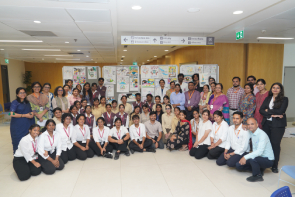
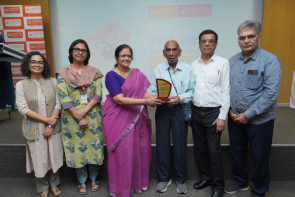
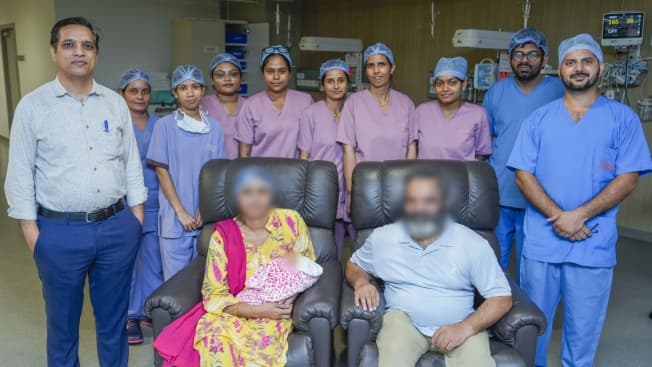
That message came alive at Amrita Hospital, Faridabad, where eye donor families were honoured alongside corneal transplant recipients at a special programme marking the conclusion of Eye Donation Fortnight. Around 10–15 donor families were felicitated for decisions that helped make sight-restoring corneal transplantation possible.
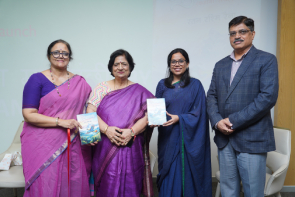
The defining moment of the programme came when Ratan Rashmi Raina, a corneal transplant recipient, presented her book, Udta Man Panchhi (उड़ता मन पंछी), written after her eyesight was restored following treatment at Amrita Hospital.
In the book’s acknowledgement, Raina expresses gratitude to Dr. Meenakshi Yadav Dhar, Professor & Head, Department of Ophthalmology, and Dr. Rashmi Mittal, Senior Consultant, Department of Ophthalmology and Head of Cornea Services, Amrita Hospital, Faridabad, for treating her eyes and helping restore her vision. She writes that it was after regaining her eyesight that she was able to write Udta Man Panchhi—a collection born from her observations of life, memories, relationships and experiences.
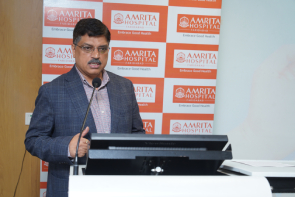
Dr. Meenakshi Yadav Dhar, Professor & Head, Department of Ophthalmology, Amrita Hospital, Faridabad, said, “We often describe corneal transplantation in terms of restored vision, but its real impact is much larger. When someone can read again, write again, move independently or return to something they love, we see what the gift of sight truly means. Ratan Rashmi Raina went on to write a book after regaining her vision. But behind her story is another equally powerful story—that of a donor family whose decision made a second chance possible. Eye donation is ultimately one human being giving another the possibility of seeing life again.”
Dr. Rashmi Mittal, Senior Consultant, Department of Ophthalmology and Head of Cornea Services, Amrita Hospital, Faridabad, said, “For people affected by corneal blindness, transplantation can offer meaningful visual rehabilitation when medically appropriate. But no transplant is possible without donated corneal tissue. The challenge, therefore, is not only medical—it is also about awareness. A decision taken by a family at an extraordinarily difficult moment can profoundly change another person’s life. Ratan Rashmi Raina’s journey—from impaired vision to restored sight and then to authorship—captures why eye donation matters in a way statistics alone never can.”
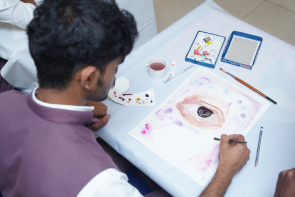
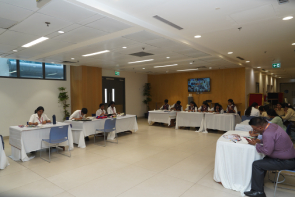
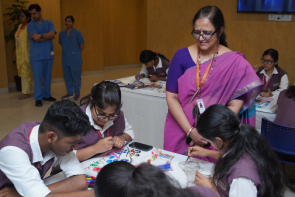
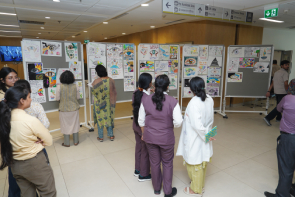
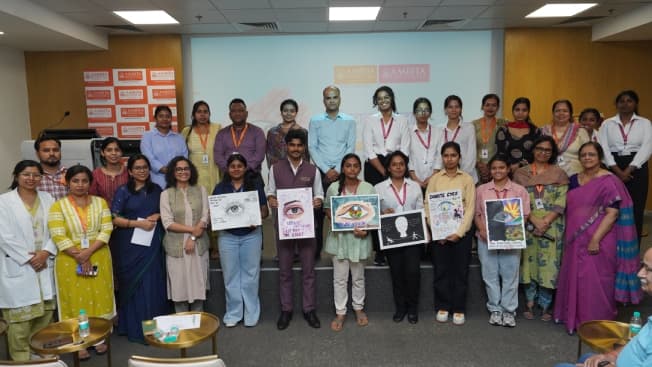
The programme also featured a poster competition and public awareness session, while representatives of NGOs supporting eye-donation activities were recognised for their contribution to spreading awareness.
Held on September 7, the programme marked the conclusion of Eye Donation Fortnight, observed nationally from August 25 to September 7 to build awareness around eye donation.