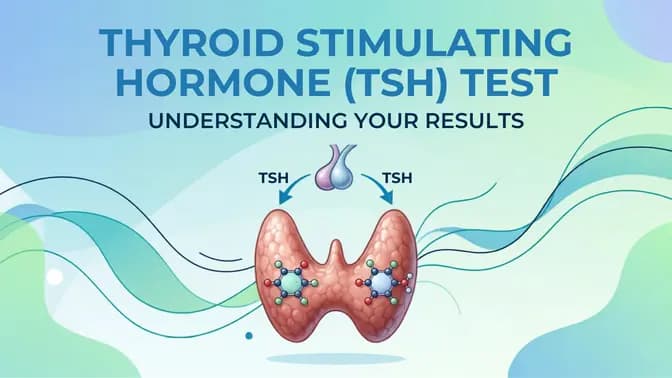
If you visit your doctor with symptoms suggestive of a thyroid problem, there is a good chance they may recommend a TSH test. This is a simple blood test that plays an important role in checking how well your thyroid gland is working. It is often one of the first tests used to detect conditions such as hypothyroidism (underactive thyroid) or hyperthyroidism (overactive thyroid).
Doctors commonly order a TSH test if you have symptoms such as fatigue, unexplained weight changes, menstrual irregularities, constipation, anxiety, palpitations, or temperature intolerance.
This guide explains what a TSH test is, why it is done, how to prepare, and what the results may mean.
What Is a TSH Test?
A TSH test is a blood test that measures the level of thyroid-stimulating hormone (TSH) in your bloodstream.TSH is made by the pituitary gland, a small gland located at the base of the brain. It signals the thyroid gland to produce and release two important hormones:
- Thyroxine (T4)
- Triiodothyronine (T3)
These thyroid hormones help regulate many important body functions, including:
- Metabolism
- Energy levels
- Heart rate
- Body temperature
- Mood
- Digestion
The TSH test helps doctors understand how well your thyroid is responding to signals from the pituitary gland.
- High TSH often suggests that the thyroid is underactive (hypothyroidism)
- Low TSH often suggests that the thyroid is overactive (hyperthyroidism)
Because thyroid hormone levels affect many systems in the body, abnormal TSH levels can influence your overall health and daily functioning.
What Is the TSH Test Used For?
The TSH test is used for several important reasons, including:
1. Diagnosing Thyroid Disorders
It is commonly used to detect:
- Hypothyroidism
- Hyperthyroidism
- Subclinical thyroid dysfunction
2. Evaluating Symptoms
Your doctor may recommend a TSH test if you have symptoms such as:
- Unexplained fatigue
- Weight gain or weight loss
- Hair loss
- Constipation
- Palpitations
- Anxiety
- Menstrual irregularities
- Feeling unusually cold or hot
3. Monitoring Thyroid Treatment
It is used to monitor people who:
- Are taking thyroid hormone replacement
- Are being treated for hyperthyroidism
- Have had thyroid surgery or radioactive iodine treatment
4. Supporting Further Thyroid Evaluation
TSH is often checked along with:
- Free T4
- Free T3
- Thyroid antibodies (if autoimmune thyroid disease is suspected, such as Hashimoto’s thyroiditis or Graves’ disease)
5. Special Situations
Your doctor may also recommend TSH testing:
- During pregnancy
- In newborn screening (to detect congenital hypothyroidism)
- In people taking certain medicines that may affect thyroid function, such as lithium or amiodarone
Why Is a TSH Test Important?
The thyroid gland affects many aspects of health, including:
- Metabolism
- Mood
- Digestion
- Fertility
- Heart health
- Bone health
If thyroid disease goes undiagnosed, it can lead to complications over time. Depending on the condition and severity, untreated thyroid problems may contribute to:
- Tiredness and poor quality of life
- High cholesterol
- Irregular periods
- Infertility
- Goitre (thyroid enlargement)
- Osteoporosis
- Heart rhythm problems
In many people, thyroid disorders begin gradually and may not cause obvious symptoms early on. That is why a TSH test can be a valuable first step in detecting thyroid imbalance.
When Should You Get a TSH Test?
Your doctor may advise a TSH test if you have symptoms of:
Hypothyroidism
- Fatigue
- Weight gain
- Cold intolerance
- Dry skin
- Constipation
- Low mood or depression
- Hair thinning
- Slow heart rate
Hyperthyroidism
- Unexplained weight loss
- Rapid heartbeat or palpitations
- Anxiety or irritability
- Heat intolerance
- Tremors
- Frequent bowel movements
- Sweating
- Sleep disturbance
A TSH test may also be recommended if you:
- Are pregnant or planning pregnancy
- Have a family history of thyroid disease
- Have an autoimmune condition
- Have had radiation exposure to the neck
- Are already on thyroid medication
- Have a thyroid swelling or nodule
Your doctor will decide whether testing is needed based on your symptoms, history, and clinical examination.
How to Prepare for a TSH Test
The good news is that a TSH test usually requires very little preparation.
Fasting
- Fasting is usually not required for a TSH test.
- However, if your doctor has ordered other blood tests along with it that require fasting, you may need to fast for 8–12 hours.
Medicines and Supplements
Tell your doctor about all medicines and supplements you take, especially:
- Thyroid medication
- Steroids
- Birth control pills
- Biotin supplements
- Amiodarone
- Lithium
Some medicines and supplements can affect thyroid test results.
Timing of the Test
TSH levels can vary slightly during the day. Many doctors prefer testing in the morning for consistency, especially when comparing results over time.
Lifestyle Factors
Acute illness, severe stress, and intense exercise may temporarily affect hormone levels, so do inform your doctor if you are unwell.
How Is the TSH Test Done?
A TSH test is a routine blood test. The procedure is simple and quick:
- You will be seated comfortably.
- A band is tied around your upper arm to make the vein easier to see.
- The skin is cleaned with an antiseptic.
- A sterile needle is inserted into a vein, usually at the inner elbow.
- A small amount of blood is collected in a tube.
- The needle is removed, and gentle pressure is applied.
- A small bandage may be placed over the site.
The entire process usually takes only a few minutes. Most people feel just a brief prick.
The blood sample is then sent to the laboratory, and results are usually available within 1–2 days, depending on the lab.
Understanding TSH Test Results
Your doctor will interpret your TSH result based on:
- The laboratory reference range
- Your symptoms
- Your age
- Pregnancy status
- Other thyroid test results (such as Free T4, Free T3, and thyroid antibodies)
In general:
- High TSH usually suggests hypothyroidism, especially if Free T4 is low
- Low TSH usually suggests hyperthyroidism, especially if Free T4 and/or Free T3 are high
- Normal TSH usually suggests normal thyroid function, though additional testing may still be needed in some cases
A result should always be interpreted in context. For example:
- A mildly raised TSH with normal Free T4 may suggest subclinical hypothyroidism
- A very high TSH with low Free T4 and clear symptoms usually supports a diagnosis of overt hypothyroidism
Normal TSH Range
TSH reference ranges may vary slightly between laboratories, depending on the method used.
For most non-pregnant adults, a typical reference range is:
- 0.4 to 4.0 mIU/L
However, the “normal” range may differ based on age, pregnancy, symptoms, and medical history.
In Pregnancy
Trimester-specific ranges are often used:
- First trimester: approximately 0.1–2.5 mIU/L
- Second trimester: approximately 0.2–3.0 mIU/L
- Third trimester: approximately 0.3–3.0 mIU/L
In Children and Older Adults
- Children may have slightly different normal ranges
- In some older adults, mildly higher TSH values may still be acceptable depending on the clinical context
It is important not to self-diagnose based only on numbers found online. Your doctor will interpret the result in the right clinical context.
What Can Affect TSH Test Results?
Several factors can influence TSH levels, including:
- Time of day – TSH may be slightly higher at night and early morning
- Acute illness – Severe infection or recent surgery can temporarily alter results
- Stress – Major physical or emotional stress may affect hormone levels
- Pregnancy – TSH naturally changes during pregnancy
- Medications – Steroids, dopamine, biotin, thyroid tablets, lithium, and amiodarone may affect results
- Iodine intake – Very high or very low iodine intake can affect thyroid function
Because of these factors, doctors may sometimes repeat the test after a few weeks if needed before making treatment decisions.
What If Your TSH Is Abnormal?
An abnormal TSH result does not always mean a serious problem, and thyroid disorders are often treatable.
High TSH
A high TSH usually suggests hypothyroidism.
If your TSH is high and Free T4 is low, your doctor may diagnose hypothyroidism and may prescribe thyroid hormone replacement (levothyroxine). The dose is adjusted gradually based on follow-up tests.
Low TSH
A low TSH may suggest hyperthyroidism.
If your TSH is low and thyroid hormone levels are high, treatment may include:
- Anti-thyroid medicines
- Radioactive iodine therapy
- Surgery (in selected cases)
- Beta-blockers to help control symptoms such as palpitations
Subclinical Thyroid Disorders
Sometimes TSH is abnormal, but T3 and T4 remain within the normal range. This is called subclinical thyroid dysfunction.
In these cases, your doctor may choose to:
- Monitor and repeat testing
- Start treatment only if certain conditions are present (for example, symptoms, pregnancy, high risk, or very abnormal values)
Treatment decisions should always be made by a qualified doctor.
How Are TSH Levels Controlled in the Body?
TSH is regulated through a feedback system called the hypothalamic-pituitary-thyroid (HPT) axis:
- The hypothalamus releases TRH (thyrotropin-releasing hormone)
- TRH signals the pituitary gland to release TSH
- TSH stimulates the thyroid gland to produce T4 and T3
- When T4 and T3 levels rise, they signal the brain to reduce TSH production
- When T4 and T3 levels fall, TSH production increases
This feedback loop helps maintain hormone balance. When the thyroid gland, pituitary gland, or related systems are affected, this balance can be disturbed.
Are There Any Risks in a TSH Test?
A TSH test is very safe. The risks are minimal and usually limited to:
- Mild pain or discomfort at the needle site
- Slight bruising
- Rarely, dizziness or fainting in sensitive individuals
Most people can return to their normal activities immediately after the test.
Conclusion
A TSH test is a simple but very useful test for understanding thyroid health. It can help detect thyroid disorders early, guide treatment, and monitor recovery over time.
If you have symptoms such as unexplained fatigue, weight changes, mood swings, menstrual irregularities, constipation, palpitations, or temperature intolerance, do not ignore them. A timely consultation and the right tests can help identify the cause early.
At Amrita Hospital, Faridabad, our experienced team can help evaluate thyroid-related symptoms, interpret test results correctly, and guide you with personalised treatment when needed.
Frequently Asked Questions
Does low TSH cause weight gain?
Usually, low TSH is associated with hyperthyroidism, which more commonly causes weight loss due to an increased metabolic rate.
Is fasting required for a TSH test?
No, fasting is usually not required if only a TSH test has been ordered. If you are having other tests that require fasting, your doctor may advise fasting beforehand.
What are the normal TSH levels during pregnancy?
Typical pregnancy ranges are:
- First trimester: around 0.1–2.5 mIU/L
- Second trimester: around 0.2–3.0 mIU/L
- Third trimester: around 0.3–3.0 mIU/L
Your doctor will interpret the result based on the trimester and your clinical condition.
Can I drink water before a TSH test?
Yes. Drinking water before a TSH test is allowed and does not affect the result.
How often should TSH levels be checked?
This depends on your individual situation.
- If you have no known thyroid disorder, testing may be done only if symptoms or risk factors are present
- If you are on thyroid treatment, your doctor may recommend regular follow-up testing
- In pregnancy, testing may be advised more frequently depending on your history and results
Can stress affect TSH levels?
Yes. Severe physical or emotional stress, acute illness, and recent surgery can temporarily affect TSH and thyroid hormone levels.
Related Blogs

Debunking 6 common myths about breastfeeding | Breastfeeding Awareness Month 2023

To Give Your Baby a Healthy Start, Don’t Skip on Newborn Screening: What Is It?
Learn more
Understanding Rheumatic Heart Disease

Air Pollution: What you need to know!
Learn more
What should be the approach to management of Localised Clinically Significant Prostate Cancer?
Learn more
What is the Normal level of PSA and who should get a PSA test done?
Learn more
MRI Prostate with PIRADS: Aiding Prostate Cancer Diagnosis
Learn more