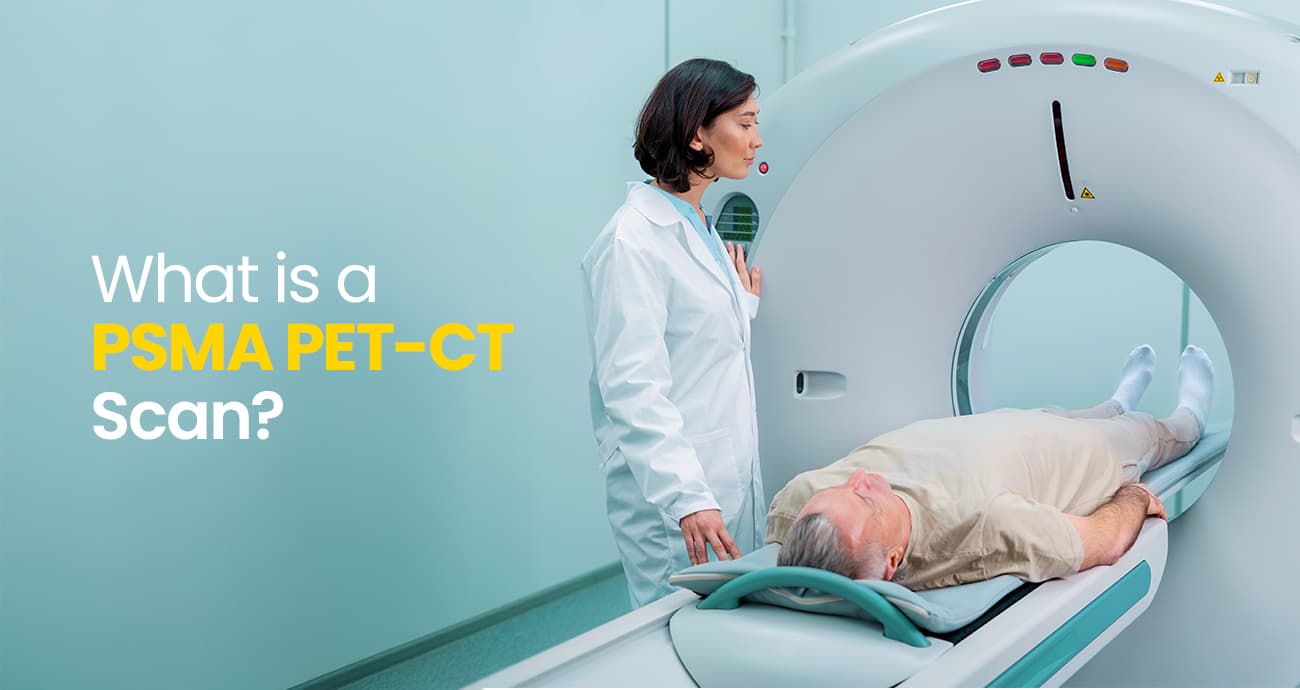
One of the most common cancers in men worldwide, prostate cancer can range in behaviour from aggressive tumours that spread swiftly to slow-growing tumours. For this reason, precise imaging is essential for diagnosis, staging, and treatment selection.
Prostate-specific Membrane Antigen (PSMA), a protein present on prostate cancer cells, is the target of the PSMA PET-CT scan, a cutting-edge imaging method. This scan carries higher sensitivity than traditional Bone scan and thus can detect lesions earlier by combining PET and CT technologies.
PSMA PET scan is now being widely adopted in hospitals and cancer care across the globe and this state of the art facility is available at Amrita Hospital, Faridabad, Haryana, India. PSMA PET-CT scan is transforming how prostate cancer is diagnosed and managed.
How the PSMA PET-CT Scan Works
To understand how a PSMA PET-CT scan works, it’s important to know what PSMA or Prostate-Specific Membrane Antigen is. PSMA is a protein that is present on the surface of prostate cancer cells in high amounts, with the highest accumulation on aggressive or advanced prostate cancer cells. Due to this fact, it is a great target for imaging, since cancer cells will “light up” in the presence of PSMA.
The scan utilises special radiotracers, typically Gallium-68 or Fluorine-18 (F-18), injected into a patient's bloodstream. These tracers are designed to bind specifically to PSMA proteins in the body. After they bind, a PET scanner detects the radiation signal given off by the tracer, while the CT scan provides detailed anatomical images. This allows doctors to see exactly where the cancer is located, even in small or previously undetectable areas.
Step-by-step: How the scan is performed
- Preparation: Patients may need to hydrate and abstain from eating for a few hours before the scan. Most of the time, little or no preparation is required.
- Radiotracer Injection: Before a scan is performed, a small amount of Gallium-68 or F-18 radiotracer is injected into a vein, usually in the arm.
- Waiting to Scan: After injection of the tracer, the patient is allowed to circulate the tracer so that it can bind to any PSMA-expressing cancer cells (typically 45–60 minutes).
- Scanning: The last phase of preparation is for the patient to lie on a table that will move into the combined PET-CT scanner. The scan usually takes 20–40 minutes.
- Results: A nuclear medicine specialist, who is trained in interpreting PSMA PET-CT scans, will review the images.
This targeted, highly sensitive approach is why PSMA PET-CT is a powerful method of detecting both primary and metastatic prostate cancer.
Advantages of PSMA PET-CT Over Traditional Imaging
When comparing PSMA PET-CT scans to those of conventional imaging tools such as MRI, CT, or bone scans, PSMA PET-CT offers significant advantages, especially in prostate cancer detection and staging:
- Higher Sensitivity and Specificity
PSMA PET-CT can detect cancer cells with greater accuracy, even when PSA levels are low, which stands as a limitation for many traditional scans.
- Earlier Detection of Recurrence
It can identify small metastases and early signs of cancer returning before they become visible on MRI or bone scans.
- More Comprehensive Imaging
It combines molecular and anatomical imaging, giving a detailed picture of the entire body in one scan.
- Less Invasive
Requires only a small radiotracer injection with no need for biopsy or invasive procedures.
- Targeted Imaging
Specifically highlights PSMA-expressing prostate cancer cells, offering precise localisation of tumours.
- Improved Treatment Planning
Enables more accurate staging and helps clinicians choose the most effective treatment strategy — surgery, radiation, or systemic therapy.
- Fewer False Positives/Negatives
Reduces uncertainty thus minimising unnecessary treatments or delayed interventions.
These benefits make PSMA PET-CT one of the best imaging options for prostate cancer, especially for men with suspected recurrence or unclear results from previous scans.
Role of PSMA PET-CT in Prostate Cancer Diagnosis and Treatment
The PSMA PET-CT scan can discriminate the precise location of the cancer, and whether it is indeed localised or already metastatic. Once the rare isotope (Gallium or Lutetium) of PSMA PET-CT is injected, even microscopic aggregates of cancer cells are evaluated to determine whether or not they are confined to the prostate, lymph nodes or have moved to distant sites. This is instrumental for the clinician to know precisely how extensive the disease is at diagnosis or upon recurrence.
The precision of detail offered is invaluable for tailoring individualised treatment approaches.
For example:
- If the scan demonstrates that the tumour is localised at diagnosis, and the prostate cancer is the primary site of disease, the patient is very likely a candidate for Robotic Radical Prostatectomy or radiation therapy directed at the prostate.
- On the other hand, if a metastasis has been identified earlier at recurrence, systemic therapies such as Hormone Therapy (HT) or Chemotherapy (CT) would be initiated.
- In some instances, it may also assist in the event of focal-directed therapies that only treat the localised (focal) area, while also preserving some normal or healthy tissues in other regions.
Furthermore, the scan gives a real-time representation mapping of prostate cancer overall for a patient, which is directly correlated to precision medicine, so there is not only the effectiveness of the treatment, but also their individual cancer profile, which is critical.
In closing, PSMA PET-CT is helping transform prostate cancer care as it is allowing deeper diagnostic visibility.
Monitoring Recurrence After Prostate Cancer Treatment
After prostate cancer treatment, one of the biggest challenges is detecting cancer recurrence early, especially when PSA levels begin to rise but conventional imaging shows no signs of the disease. This is where PSMA PET-CT scans have emerged as a more sensitive modality in identifying biochemical recurrence, a rise in PSA without visible tumours.
PSMA PET-CT is highly sensitive and can detect even minute traces of prostate cancer cells that may have escaped earlier treatment. Its ability to pinpoint recurrence, even at very low PSA levels, makes it far more effective than traditional scans in guiding the next steps of care.
Importantly, the scan plays a crucial role in planning salvage therapy, helping doctors decide whether to proceed with targeted radiation, surgery, or systemic treatment based on exactly where the cancer has returned. This personalized approach leads to better outcomes and avoids unnecessary or ineffective treatments.
In short, PSMA PET-CT offers peace of mind for patients and physicians alike by ensuring that any signs of cancer returning are caught and addressed as early and accurately as possible.
Clinical Evidence and Endorsements
The clinical success of PSMA PET-CT scan is supported by extensive research and growing endorsement from leading health organisations. Multiple clinical trials, including the ones sponsored by the National Cancer Institute (NCI), have demonstrated its superior diagnostic performance over conventional imaging methods for prostate cancer.
One of the most influential studies, the pro PSMA trial (Hofman et al., Lancet, 2020), found that PSMA PET-CT had 27 per cent greater accuracy in staging high-risk prostate cancer compared to standard imaging. The trial also noted significantly fewer ambiguous results and a lower radiation dose to the patient.
In recognition of these outcomes, the U.S Food and Drug Administration (FDA) has approved several PSMA-targeted radiotracers, including Gallium-68 PSMA-11 and F-18 DCFPyL, for use in PET imaging of prostate cancer. According to the NCI, PSMA PET imaging is now a recommended tool for staging and evaluating recurrent disease due to its high sensitivity and specificity.
Moreover, PSMA PET-CT is now also being widely adopted by cancer centres across the U.S, Europe, and Australia, marking a major shift in how prostate cancer is diagnosed and managed. Institutions such as the Mayo Clinic, MD Anderson, and UCLA have incorporated PSMA PET-CT into their routine practice, which further validates its clinical utility.
All the above stated bring us to the inference that the evidence is compelling - PSMA PET-CT is not just clinically validated. It is also endorsed by some of the world’s most respected cancer research and treatment institutions, positioning the procedure as the new gold standard in the imaging of prostate cancer.
What Patients Can Expect from a PSMA PET-CT Scan
If the doctor has recommended a PSMA PET-CT scan, knowing what to expect can help ease your anxiety. The procedure is safe, painless, and typically completed within a couple of hours.
Before the Scan
- You may be asked to fast for 4–6 hours before the procedure.
- Drinking water is encouraged to stay hydrated.
- Let your doctor know about any medications or health conditions beforehand.
- No special preparations are usually needed beyond these steps.
During the Scan
- A small amount of radioactive tracer (like Gallium-68 or F-18) will be injected into a vein in your arm.
- You’ll wait 45–60 minutes to allow the tracer to circulate and bind to prostate cancer cells.
- You’ll then lie on a scanning table, which slowly moves through the PET-CT scanner.
- The scan takes about 30 minutes, and you’ll need to stay still during imaging.
After the Scan
- You can resume normal activities immediately.
- Drink plenty of fluids to help flush the tracer out of your system.
- Side effects are rare, but mild discomfort at the injection site may occur.
Is PSMA PET-CT Safe?
Yes, the scan is considered safe. It uses a low dose of radiation and has a strong safety record. The benefits of accurate cancer detection outweigh the minimal risks involved.
The Value of PSMA PET-CT in Modern Prostate Cancer Care
As we have already understood, the PSMA PET-CT scan has revolutionised how health care facilities detect, stage and manage prostate cancer. With its ability to identify cancer cells with remarkable accuracy, even at low PSA levels, it offers a powerful edge over traditional imaging techniques.
From the very initial stage of guiding treatment to monitoring recurrence, the PSMA PET-CT scan has become an essential part of modern prostate care. If you or a loved one is facing a prostate cancer diagnosis, it’s important to explore the most advanced diagnostic options available.
Take the Next Step at Amrita Cancer Care, Faridabad
At Amrita Cancer Care, Faridabad, we offer state-of-the-art PSMA PET-CT scanning as a part of our comprehensive prostate cancer care. Backed by expert Uro-Oncologists, advanced technology, and compassionate care, we are here to support you every step of the way.
Book a consultation today and take control of your prostate health with confidence. Visit https://www.amritahospitals.org/faridabad
Or call us at 1800 425 1999 to schedule your appointment.
FAQs
Q1: What makes PSMA PET-CT different from a regular PET scan?
A regular PET scan uses tracers that detect general cancer activity, while PSMA PET-CT specifically targets PSMA protein, which is highly expressed in prostate cancer cells, hence making it more accurate for prostate cancer.
Q2: How accurate is PSMA PET for prostate cancer?
Studies show PSMA PET-CT has a detection rate of over 85–95%, especially in cases of recurrence or low PSA levels.
Q3: Is PSMA PET-CT covered by insurance?
Coverage varies by region and insurance plan. Some policies may cover it for staging or recurrence; prior authorisation is usually required.
Q4: When is a PSMA PET-CT scan recommended?
It is recommended for the initial staging of high-risk prostate cancer, evaluating biochemical recurrence, or assessing treatment response in advanced cases.
Related Blogs

Debunking 6 common myths about breastfeeding | Breastfeeding Awareness Month 2023

To Give Your Baby a Healthy Start, Don’t Skip on Newborn Screening: What Is It?
Learn more
Understanding Rheumatic Heart Disease

Air Pollution: What you need to know!
Learn more
What should be the approach to management of Localised Clinically Significant Prostate Cancer?
Learn more
What is the Normal level of PSA and who should get a PSA test done?
Learn more
MRI Prostate with PIRADS: Aiding Prostate Cancer Diagnosis
Learn more