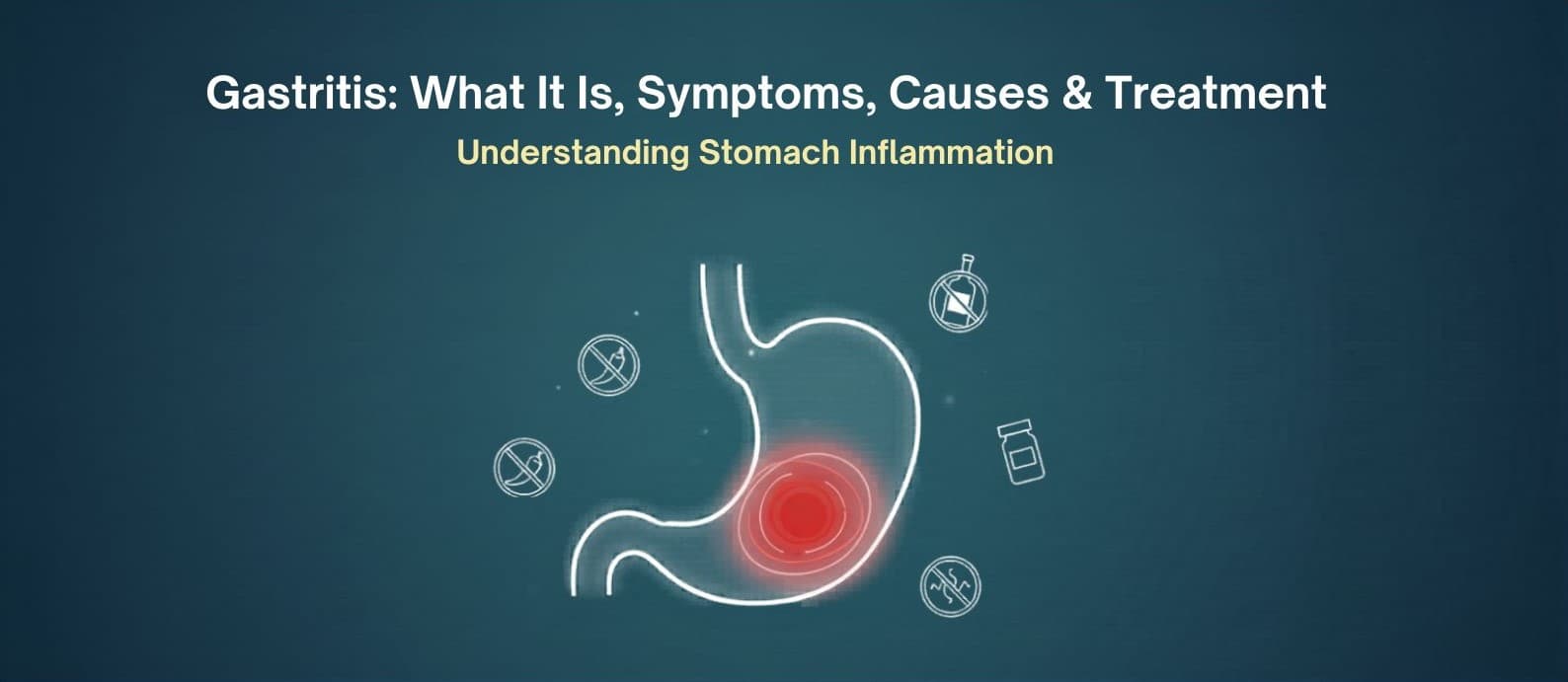
Gastritis is a common digestive condition that refers to inflammation of the stomach lining. While many people experience occasional stomach irritation, gastritis goes beyond simple indigestion. It can occur suddenly (acute gastritis) or develop gradually over time (chronic gastritis), and in some cases, it may lead to complications if left untreated.
Understanding the symptoms, causes, risk factors, and preventive measures can help you manage the condition effectively and protect your long-term digestive health.
What Is Gastritis?
Gastritis occurs when the protective mucosal lining of the stomach becomes inflamed or weakened. This protective barrier normally shields the stomach wall from harsh digestive acids. When the barrier is damaged, acid can irritate the lining, leading to pain and discomfort.
A common subtype is antral gastritis, which affects the lower portion (antrum) of the stomach.
Types of Gastritis
1. Acute Gastritis
Appears suddenly and may cause noticeable pain or discomfort. It is often triggered by:
- Alcohol consumption
- NSAID overuse
- Severe stress or illness
2. Chronic Gastritis
Develops gradually and may persist for months or years. It is commonly linked to:
- Helicobacter pylori infection
- Autoimmune disorders
- Long-term irritation
Common Symptoms
Gastritis does not always produce symptoms. When it does, you may experience:
- Burning or gnawing pain in the upper abdomen
- Indigestion (may improve or worsen after eating)
- Nausea
- Vomiting
- Feeling of fullness after meals
- Bloating
Seek Immediate Medical Care If You Notice:
- Severe abdominal pain
- Vomiting blood
- Black or tarry stools
- Persistent vomiting
- Dizziness or lightheadedness
Causes of Gastritis
Several factors can damage the stomach lining:
1. Helicobacter pylori Infection
A bacterial infection that affects the stomach lining and is one of the most common causes worldwide.
2. Overuse of Pain Relievers (NSAIDs)
Regular use of medicines like ibuprofen or naproxen can weaken the stomach’s protective barrier.
3. Excessive Alcohol Consumption
Alcohol irritates and erodes the stomach lining.
4. Stress
Severe physical stress from surgery, burns, or major infections can trigger acute gastritis.
5. Autoimmune Conditions
In autoimmune gastritis, the body mistakenly attacks its own stomach lining cells.
6. Other Medical Conditions
Conditions such as Crohn’s disease, HIV/AIDS, celiac disease, and certain infections may increase risk.
Risk Factors
- Older age
- Smoking
- Poor diet
- Chronic alcohol intake
- Long-term NSAID use
- Family history of autoimmune disorders
Possible Complications if Left Untreated
If not managed properly, gastritis can lead to:
- Peptic ulcers
- Gastric bleeding
- Stomach perforation (rare but serious)
- Anemia due to chronic bleeding
- Vitamin B12 deficiency
- Increased risk of stomach cancer (in chronic cases particularly associated with H.Pylori infection)
Early diagnosis significantly reduces these risks.
How Is Gastritis Diagnosed?
Doctors may recommend:
- H. pylori testing (rapid urease test, stool test, histology from biopsy, breath test)
- Endoscopy to directly examine the stomach lining
- Biopsy (if needed)
- Barium swallow X-ray in certain cases
Treatment Options
Treatment depends on the underlying cause.
Medications May Include:
- Antibiotics (for H. pylori infection)
- Proton Pump Inhibitors (PPIs) to reduce acid
- H2 blockers (acid blockers)
- Antacids for symptom relief
Stopping NSAIDs or reducing alcohol intake may also be necessary.
Preventive Measures for Antral Gastritis
Preventing gastritis is often simpler than treating it.
Practice Good Hygiene
- Wash hands before meals
- Ensure food is properly cooked and stored
- Drink clean water
Use NSAIDs Responsibly
- Avoid overuse
- Take with food
- Consult your doctor for long-term use
Maintain a Balanced Diet
- Increase fruits, vegetables, lean proteins
- Reduce processed foods and excess salt
Limit Alcohol & Quit Smoking
Both directly damage the stomach lining.
Manage Stress
- Exercise regularly
- Practice yoga or meditation
- Maintain adequate sleep
Avoid Trigger Foods
Common triggers include:
- Coffee
- Spicy foods
- Citrus fruits
- Tomatoes
Diet Guide for Antral Gastritis
Foods to Eat
- Bananas, melons, pears
- Cooked vegetables (carrots, pumpkin, spinach)
- Lean meats and fish
- Oats and brown rice
- Yogurt and probiotic foods
Foods to Avoid
- Spicy foods
- Citrus fruits and tomatoes
- Fried and fatty foods
- Alcohol
- Caffeinated drinks
- Carbonated beverages
Small, frequent meals are often better tolerated than large meals.
How Long Does Gastritis Last?
- Acute gastritis: Usually improves within 2–10 days once the irritant is removed.
- Chronic gastritis: May persist longer and requires structured management.
Antral Gastritis
Antral gastritis is a form of gastritis that affects the antrum — the lower portion of the stomach. Gastritis refers to inflammation of the stomach lining and may develop suddenly (acute) or gradually over time (chronic).
Although most cases are manageable, untreated gastritis can increase the risk of stomach ulcers and, in rare cases, stomach cancer.
The good news? With early diagnosis and proper care, antral gastritis is highly treatable.
What Is Antral Gastritis?
The stomach is lined with a protective mucus layer called the mucosa, which shields it from strong digestive acids. When this protective barrier is weakened or damaged, stomach acid irritates the lining, leading to inflammation.
In antral gastritis, this inflammation specifically affects the antrum, the lower part of the stomach responsible for grinding food and regulating gastric emptying.
The most common cause is infection with a bacterium called Helicobacter pylori (H. pylori).
Types of Antral Gastritis
1. Erosive (Reactive) Gastritis
- Causes inflammation and erosion of the stomach lining
- Often linked to alcohol, smoking, NSAIDs, corticosteroids, infections, or severe stress
2. Non-Erosive Gastritis
- Causes inflammation without visible erosion
- Frequently associated with H. pylori infection or autoimmune conditions
Symptoms of Antral Gastritis
Symptoms may vary from mild to severe. Some people may not notice symptoms at all.
Common symptoms include:
- Burning or gnawing pain in the upper abdomen
- Bloating or feeling full after meals
- Nausea
- Loss of appetite
- Indigestion
- Stomach ulcers (in advanced cases)
Seek Immediate Medical Care If You Experience:
- Vomiting blood
- Black or tarry stools
- Severe abdominal pain
- Persistent vomiting
Causes of Antral Gastritis
Several factors may damage the stomach lining:
H. pylori Infection
The most common cause worldwide. The bacteria weaken the stomach’s protective coating, leading to inflammation and ulcers.
Chronic Alcohol Consumption
Alcohol irritates and erodes the stomach lining.
Autoimmune Disorders
The immune system mistakenly attacks healthy stomach lining cells.
Bile Reflux
Bile from the liver backs up into the stomach, irritating the lining.
Long-Term NSAID Use
Frequent use of pain relievers such as ibuprofen or naproxen can weaken stomach defenses.
Possible Complications If Left Untreated
Ignoring persistent gastritis can lead to serious conditions such as:
- Anemia due to chronic bleeding
- Pernicious anemia from vitamin B12 deficiency
- Peptic ulcers
- Gastric bleeding
- Increased risk of stomach cancer (in chronic cases linked to H. pylori or autoimmune gastritis)
Early treatment significantly reduces these risks.
Diagnosis
Doctors may recommend:
- H. pylori testing (stool or breath test)
- Endoscopy to examine the stomach lining
- Biopsy (if required)
- Blood tests to check for anemia or B12 deficiency
Treatment Options
Treatment depends on the underlying cause.
Medications May Include:
- Antibiotics (for H. pylori infection)
- Proton Pump Inhibitors (PPIs)
- H2 blockers
- Antacids
If caused by autoimmune gastritis, vitamin B12 injections may be necessary.
Dietary modifications and avoiding irritants are equally important parts of treatment.
Preventive Measures
Healthy habits can reduce your risk of developing antral gastritis:
- Avoid greasy, fried, spicy, and acidic foods
- Limit caffeine
- Reduce alcohol consumption
- Eat smaller, more frequent meals
- Manage stress effectively
- Avoid lying down for 2–3 hours after eating
- Use pain relievers cautiously and only when necessary
Good hygiene practices may also help reduce the risk of H. pylori infection.
Frequently Asked Questions
Can stress cause gastritis?
Yes. Stress can increase acid production and weaken the stomach’s protective barrier.
Can gastritis cause weight loss?
Yes. Chronic inflammation, reduced appetite, and nutrient absorption issues may lead to unintended weight loss.
Is gastritis serious?
Most cases are mild and manageable. However, untreated chronic gastritis can lead to complications.
When to See a Doctor?
If symptoms persist for more than a week, worsen, or include bleeding or severe pain, seek medical evaluation promptly.
Is antral gastritis serious?
Most cases are mild and manageable. However, untreated chronic gastritis may lead to complications.
Can stress worsen antral gastritis?
Yes. Stress can increase acid production and aggravate symptoms.
How long does it take to recover?
Acute cases may improve within days to weeks. Chronic gastritis may require longer treatment and lifestyle adjustments.
Related Blogs

Debunking 6 common myths about breastfeeding | Breastfeeding Awareness Month 2023

To Give Your Baby a Healthy Start, Don’t Skip on Newborn Screening: What Is It?
Learn more
Understanding Rheumatic Heart Disease

Air Pollution: What you need to know!
Learn more
What should be the approach to management of Localised Clinically Significant Prostate Cancer?
Learn more
What is the Normal level of PSA and who should get a PSA test done?
Learn more
MRI Prostate with PIRADS: Aiding Prostate Cancer Diagnosis
Learn more