
Neurology and Stroke Medicine
Overview
The Centre for Neurosciences at Amrita, Faridabad provides full facilities for investigations and treatment of neurological disorders in adults and children. The Department utilizes state-of-the art-technology and a world-class medical team to provide care to the patients with Stroke, Parkinson’s disease and movement disorders, epilepsy, neuromuscular and autoimmune disorders.
Specialities Center
Diseases Treated
- Stroke
- Parkinson’s disease and movement disorders such as Dystonia, Essential Tremors, Ataxias, Tic disease, Chorea,
- Epilepsy
- Headache including migraine
- Demyelinating diseases such as multiple sclerosis
- Blood vessel disorders in the brain, including arteriovenous malformations and cerebral aneurysms
- Degenerative diseases, including Alzheimer disease
- Peripheral nerve diseases (neuropathy), which affect the nerves that carry information to and from the brain and spinal cord
- Psychiatric disorders, such as schizophrenia
- Neuro-ophthalmologic diseases, which are vision problems that result from damage to the optic nerve or its connections to the brain
- Infections, such as meningitis
- Neuro infections
- Neuromuscular disorders
Doctors
Why Choose us?
Unmatched in brain care, with Cutting-edge technology for the best treatment
What we offer
- Best in Adult neuro Care
- Sub-Speciality Based Approach
- Multidisciplinary And Interdisciplinary teams
- Cutting-Edge Diagnostic and Treatment Technologies
- Cost-Effective
Facilities
- Deep brain stimulation: evaluation and programming
- Human motor control lab including neurophysiology
Speciality Clinics
- Parkinson’s disease and movement disorders
- Botulinum toxin clinic (Electromyography and ultrasound guided)
- Stroke and neurovascular disorders
- Epilepsy clinic
- Cognitive Neurology including Dementia Clinic
- Headache Clinic
- Neuromuscular Disorders Clinic
FAQs
- Tremor. Rhythmic shaking, called tremor, usually begins in a limb, often your hand or fingers
- Slowed movement, known as bradykinesia
- Rigid muscles
- Impaired posture and balance
- Loss of automatic movements
- Speech changes
- Writing changes
Epilepsy is a disease of the brain defined by at least two unprovoked seizures within 24hrs apart or one unprovoked seizure with a recurrence risk of more than 60% in the next 10 years. In this, the brain produces uncontrolled electrical bursts like a lightning storm which makes the patient unconscious or unresponsive with many different symptoms. The prevalence estimates in India for 2019 range from 3·0 to 11·9 per 1000 of the population and incidence from 0·2 to 0·6 per 1000 of the population per year, with a major contribution from the rural population. It can affect any age, race, or gender.
There are two major types of seizures:
Focal: Focal with intact awareness and Focal with impaired awareness.
Generalized: Absence, Myoclonic, Tonic, Atonic, Tonic-Clonic, and Clonic seizures.
The main symptoms of stroke can be remembered with the word BE-FAST:
- Balance- Loss of balance
- Eyes- Difficulty in seeing
- Face – the face may have dropped on 1 side, the person may not be able to smile, or their mouth or eye may have dropped.
- Arms – the person with a suspected stroke may not be able to lift both arms and keep them there because of weakness or numbness in 1 arm.
- Speech – their speech may be slurred or garbled, or the person may not be able to talk at all despite appearing to be awake; they may also have problems understanding what you're saying to them.
- Time – it's time to dial immediately if you see any of these signs or symptoms.
Treatment depends upon the type of stroke a person has: Haemorrhagic or ischemic stroke.
In Ischemic stroke, the treatment depends upon the total duration from the onset of stroke. If a patient reached the hospital within 4.5 hours, then an immediate injection to dissolve the clot (thrombolysis) can be given and other procedures can also be done to remove the clot from the artery.
In haemorrhagic stroke, treatment depends upon the size of the haemorrhage. If it is too large, then immediate surgery is required to save the life of the patient. If the size is small, then only ICU care and medicines are required.
Any stroke patient will require good ICU care, nursing care, and physiotherapy for fast recovery.
These are one of the most common symptoms patients come from with a Neurology OPD. Headache has multiple reasons, and it ranges from a common causes like Migraine to life-threatening causes.
The causes are divided into two major categories:
Primary headache and Secondary Headache.
Primary headache:
Primary headache has many sub-types and includes:
- Migraine
- Cluster headache
- Tension headaches.
- New daily persistent headaches (NDPH).
Secondary headaches:
Secondary headaches are related to other medical condition, such as:
- Disease of blood vessels in the brain.
- Head injury.
- High blood pressure (hypertension).
- Infection.
- Medication overuse.
- Sinus congestion.
- Trauma.
- Tumor.
There are many symptoms which if present with headache, then the patient requires urgent medical attention:
- Sudden onset of headache
- Progressive (increasing in severity)
- Blurred vision
- Vomiting
- Dizziness and imbalance of gait
- Fever
- Weakness
- Personality changes/behavior change/mental confusion
- Headache that awakens you at night
- New onset headache
- Headache triggered by bending or coughing or strenuous activity
This needs detailed medical history about the nature and characteristics of headache and if found necessary then investigations like CT scan or MRI Brain will be required.
- Inability to communicate.
- No awareness of recent experiences or surroundings.
- Weight loss with little interest in eating.
- Seizures.
- General physical decline, including dental, skin, and foot problems.
- Difficulty swallowing.
- Groaning, moaning, or grunting.
- Increased sleeping.
Patient Stories
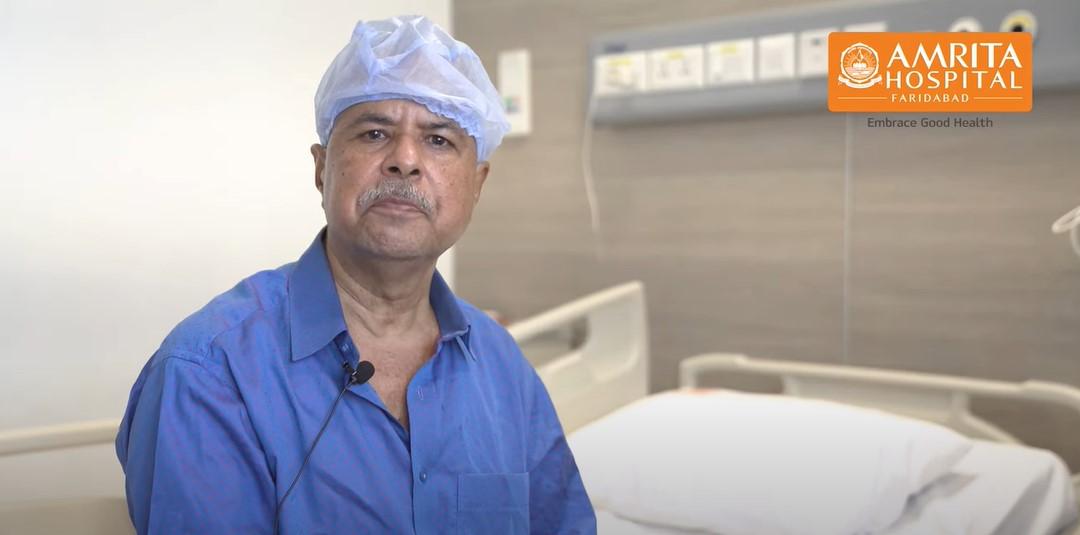
Deep Brain Stimulation surgery
Durllava Charan Jethy
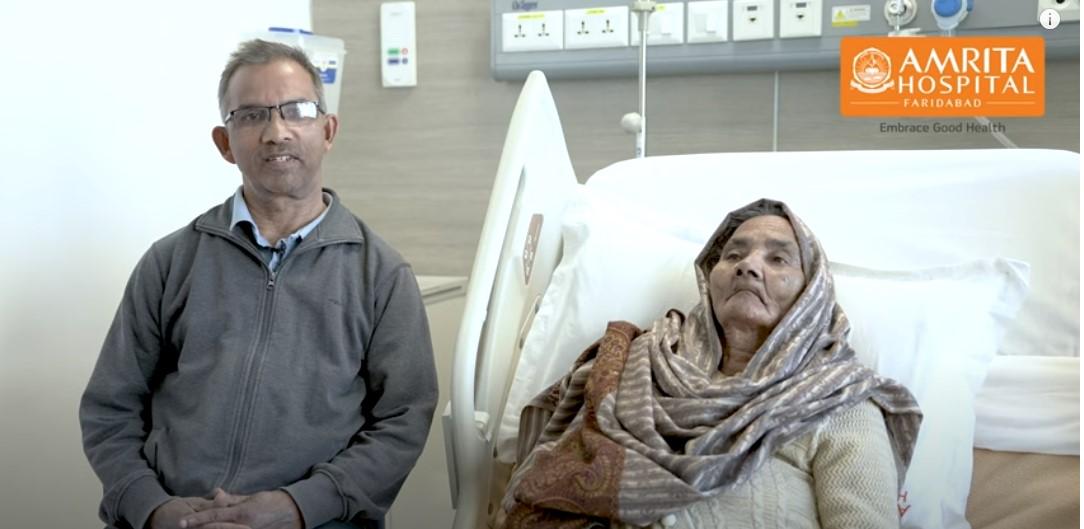
Parkinson's Disease treatment by Dr Sanjay Pandey
Mrs. Barpayi , Faridabad
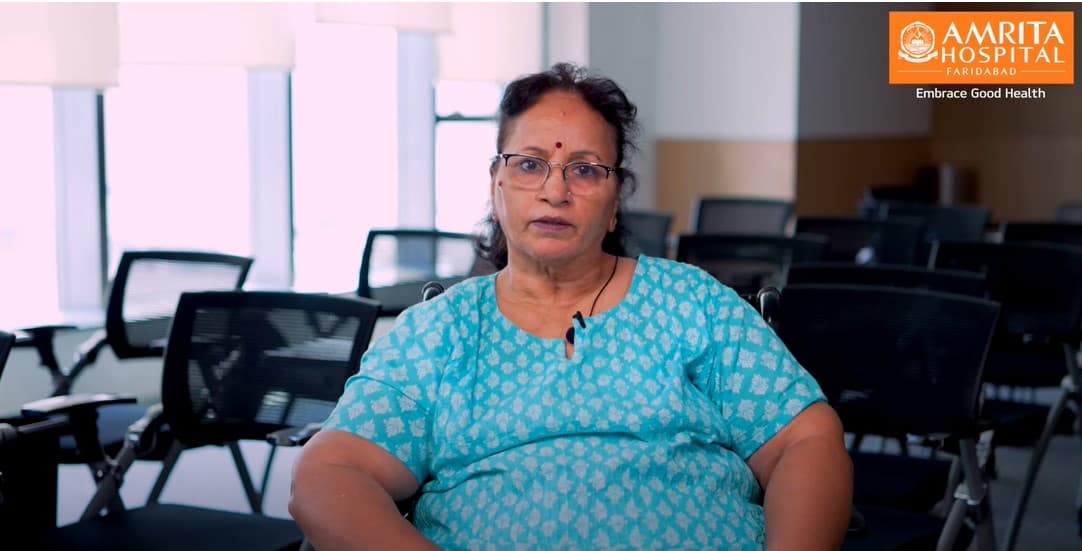
Mrs. Rani Chabbra underwent Parkinson's Treatment at Amrita Hospital, Faridabad
Mrs. Rani Chabbra, Faridabad
Diagnostic Tests
- Electroencephalography (EEG) including long term video EEG monitoring
- Electromyography
- Evoked potentials
- Sleep lab including polysomnography
- Electroneuromyography
- Rapid Nerve Stimulation test
- Transcranial doppler test
- Neuromuscular Ultrasonography